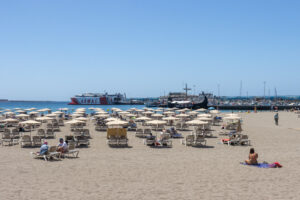
Playa San Marcos
Icod's Volcanic Cove by the Sea
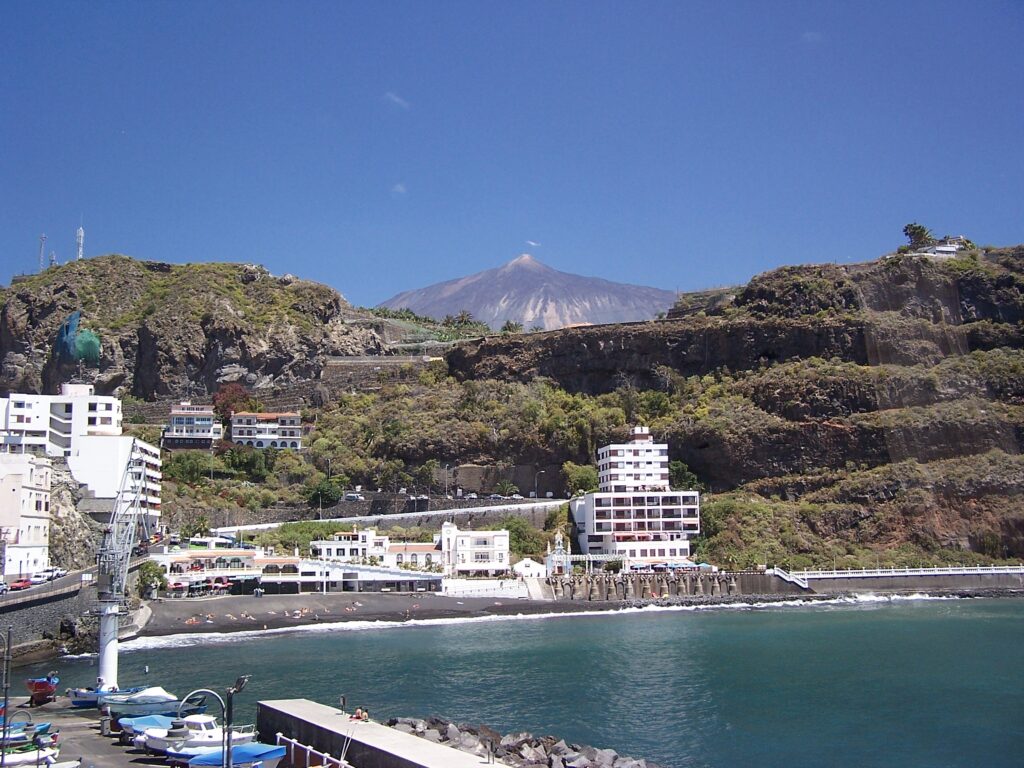
A dark-sand bay on Tenerife's north coast, reached by road from Icod de los Vinos down through banana terraces to the sea. Cliffs rise on either side of the cove, sheltering a small fishing settlement that has grown into one of the north's most visited beaches.
Playa San Marcos sits at the foot of a steep barranco dropping from Icod de los Vinos, where terraced vineyards and banana groves give way to the darker palette of the north coast — black sand, weathered basalt and the long Atlantic swell. The descent from town traces this shift in miniature, moving from cultivated slopes into a volcanic cove carved by millennia of erosion.
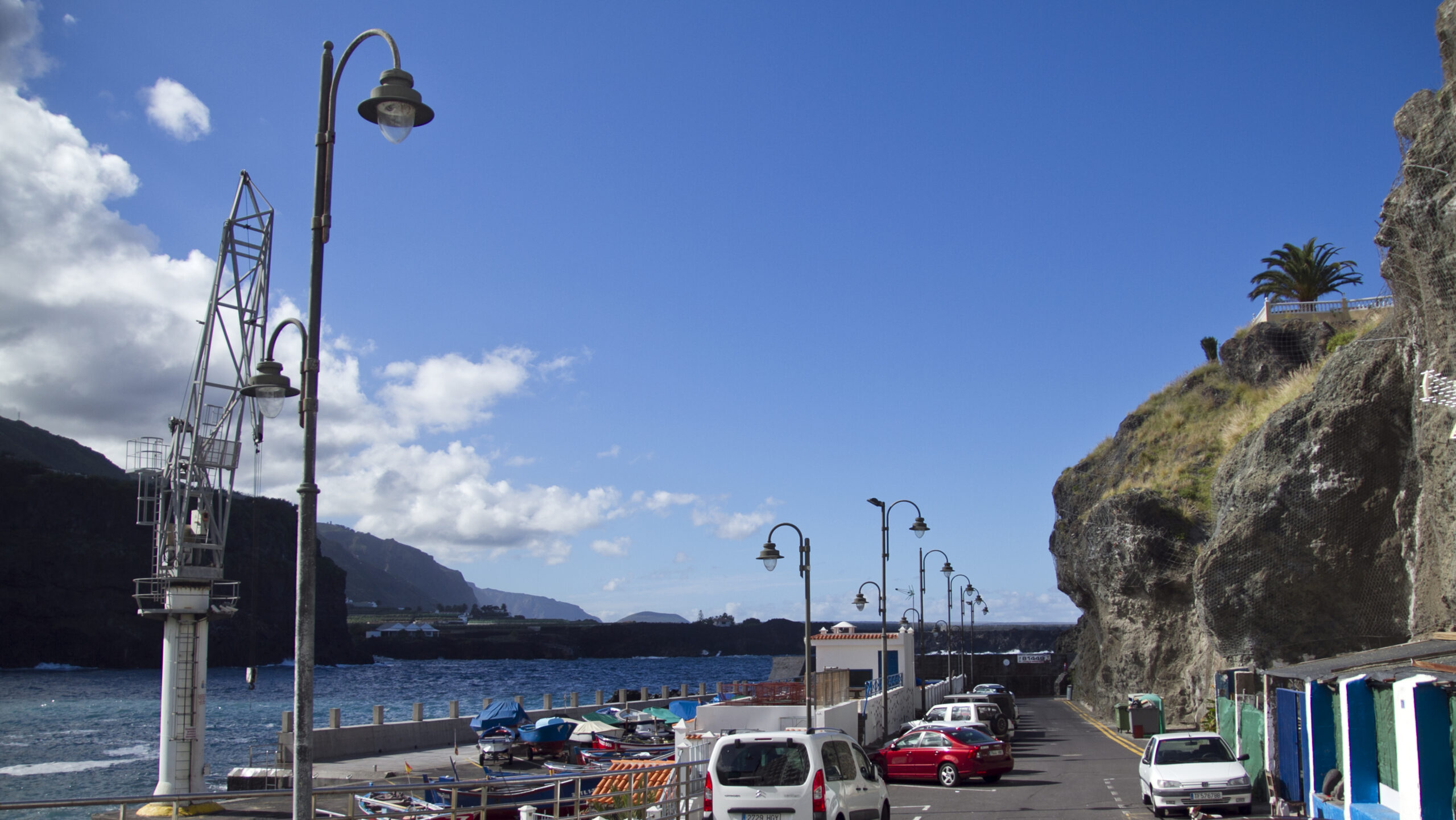
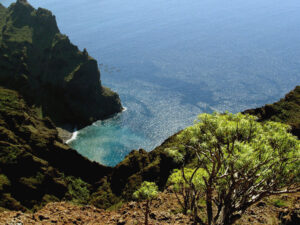
The bay is enclosed by cliffs typical of this part of Tenerife, where old lava flows met the ocean and hardened into headlands that now shelter the cove from the full force of the open sea. Even so, the north coast’s swell and currents remain stronger and more changeable than those on the island’s sheltered south, and conditions here can shift with season and weather.
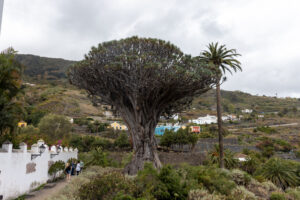
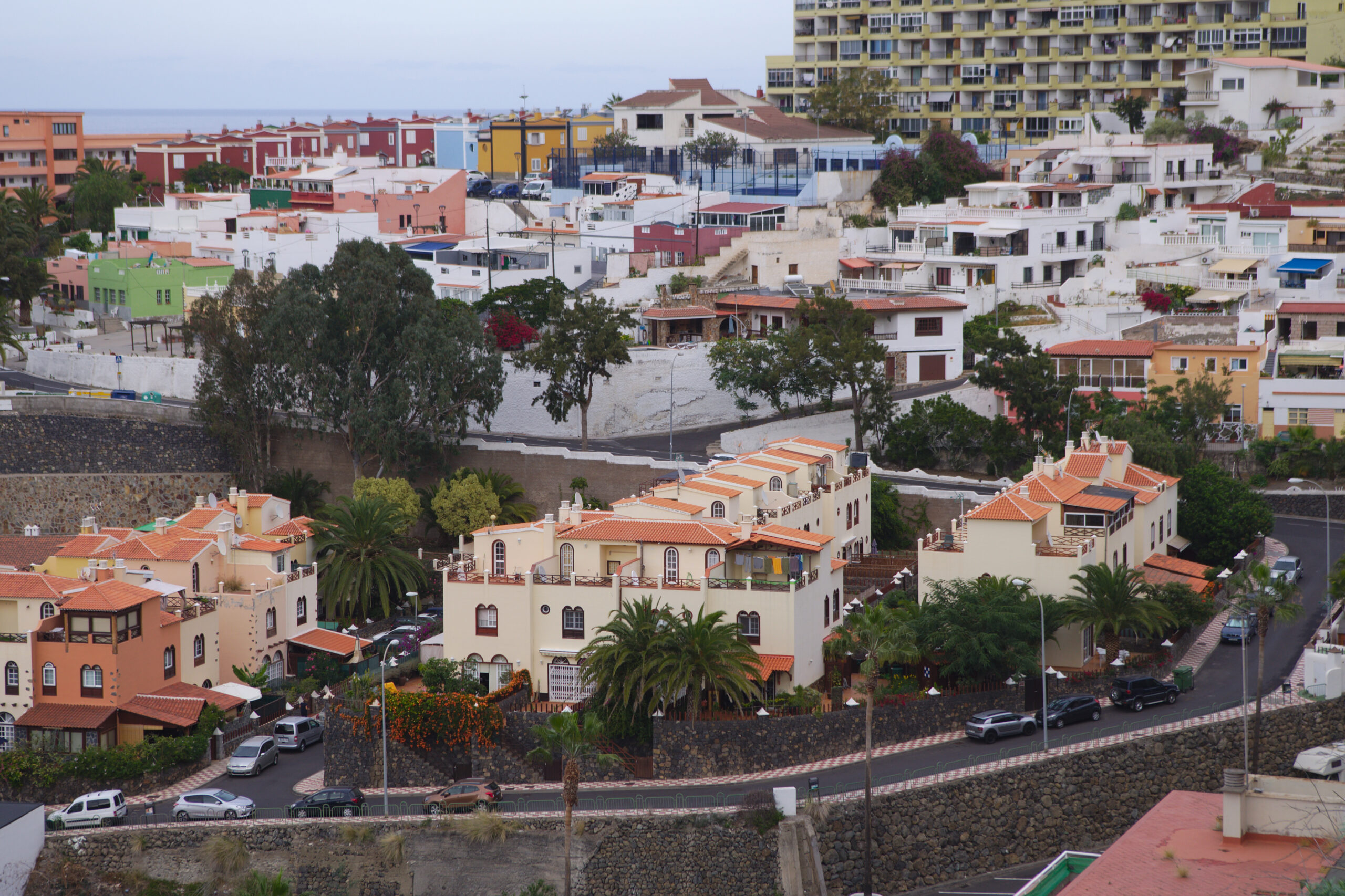
A small fishing community grew around the cove long before it became a swimming beach, and that history is still visible in the older houses and workshops clustered near the shore. The settlement feels like an outpost of inland Icod rather than a purpose-built resort — a coastal extension of a town known more for its dragon tree, vineyards and traditional agriculture than for beach tourism.
The trade winds that shape the climate of northern Tenerife are felt clearly here, keeping the air fresher than in the south and feeding the greenery on the hillsides above. San Marcos works best when understood as part of a wider landscape: terraced slopes and laurel-tinged vegetation inland, black volcanic rock and Atlantic swell at the water’s edge, all tied together by the steep geography that defines this stretch of coast.