Arucas Cathedral
Volcanic Stone Rising Over the Banana Fields
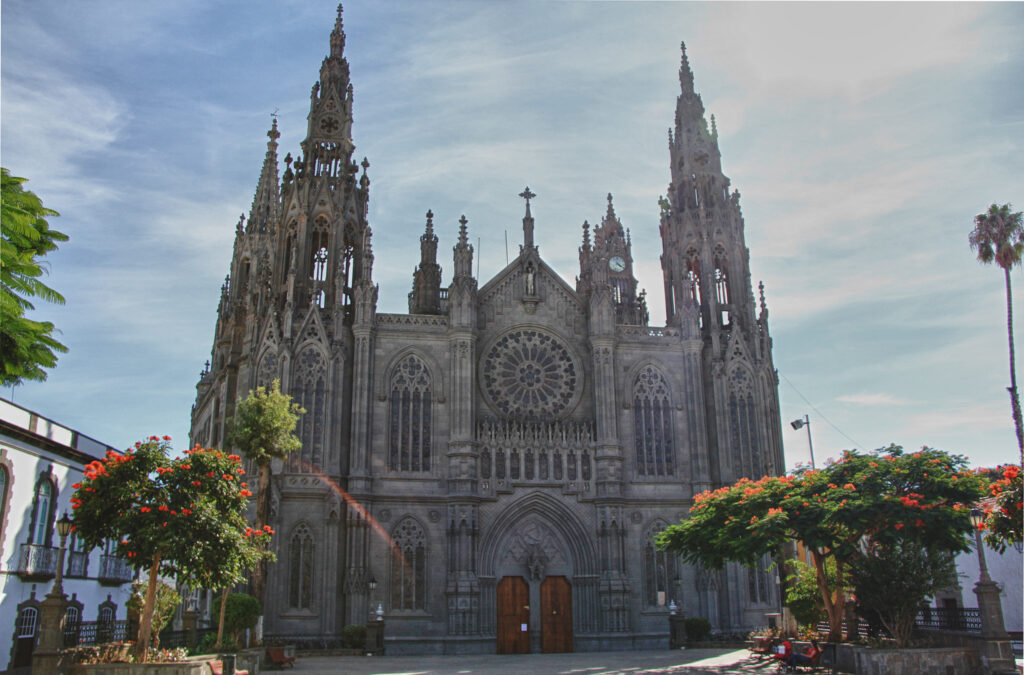
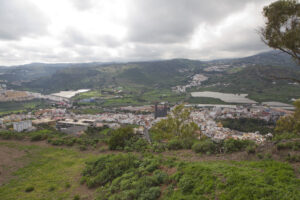
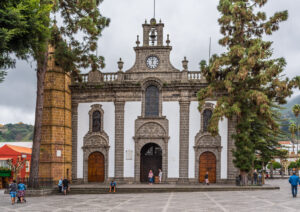
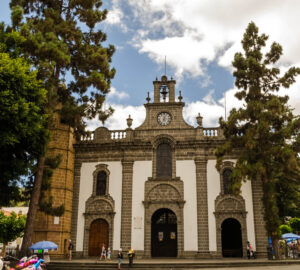
The parish church of San Juan Bautista dominates the skyline of Arucas, carved from the dark volcanic stone that defines this northern district. Its Neo‑Gothic spires rise above a landscape of banana plantations, old sugar‑cane fields and the volcanic slopes that roll down toward the Atlantic.
Arucas lies on the lower slopes of the volcanic cone that gives the town its name, in one of Gran Canaria’s most fertile northern districts. At its centre stands the parish church of San Juan Bautista — popularly known as Arucas Cathedral for its scale — a landmark carved almost entirely from the grey‑black basalt quarried around the town.
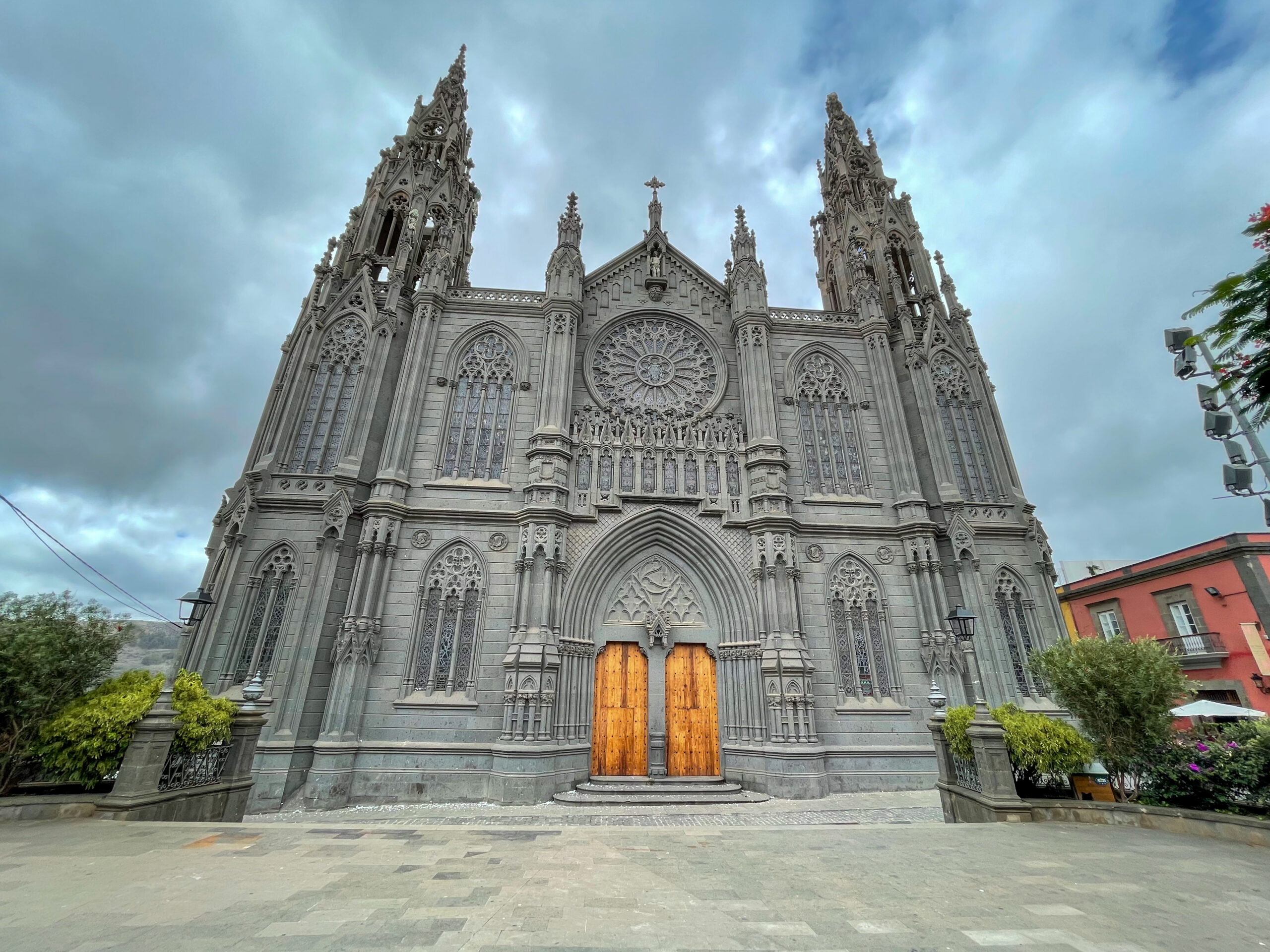
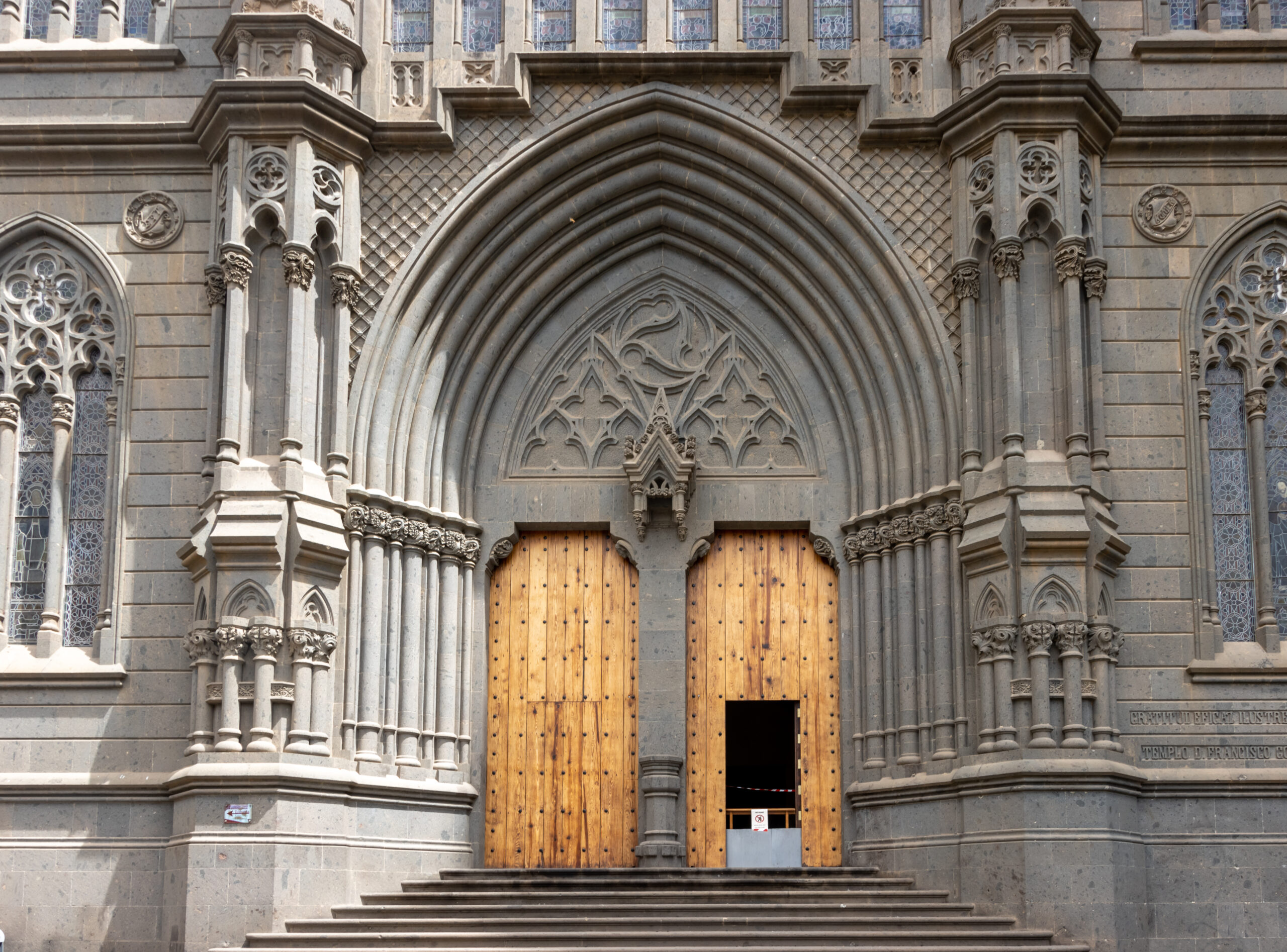
The stone is central to Arucas’ identity. Weathered by the moisture‑laden trade winds that sweep across the north, it gives the cathedral a dark, textured presence distinct from the paler buildings of the island’s south. Its spires and tracery rise above a town shaped by centuries of agriculture: sugar cane in earlier times, and today the banana plantations that stretch across the volcanic plain below.
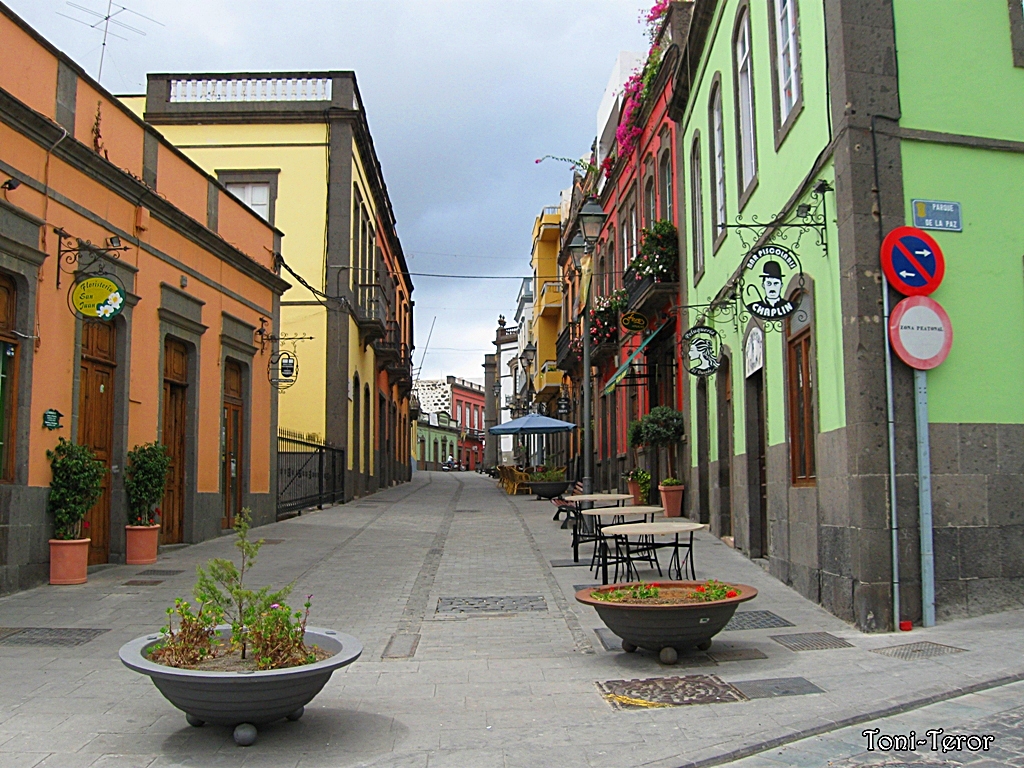
Around the cathedral, Arucas retains the layout of a traditional market town. Narrow streets lined with colonial façades lead toward the main plaza, where civic buildings and gardens make use of the mild northern climate. The cathedral’s height and colour anchor this urban core, visible from much of the surrounding countryside.
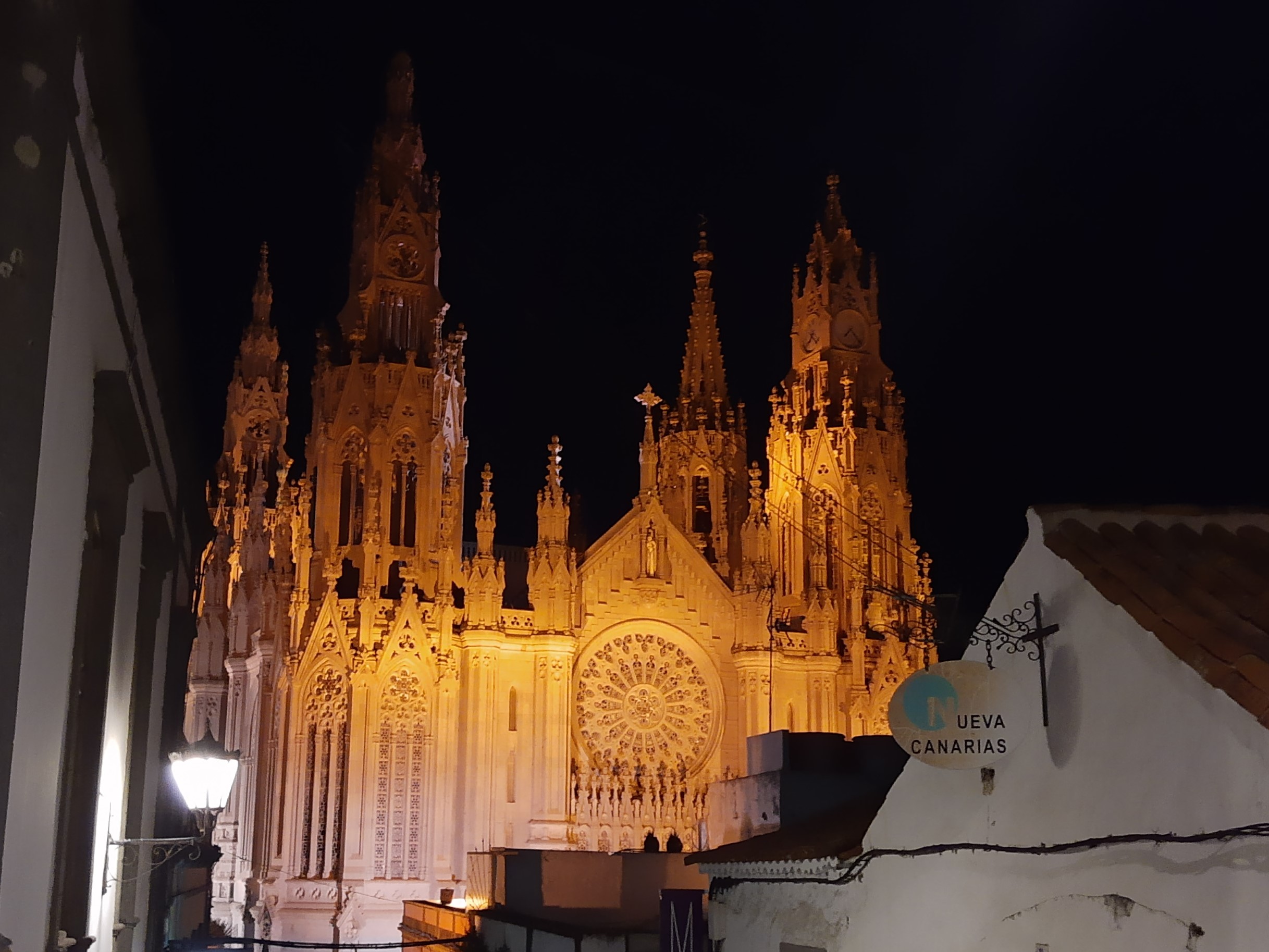
From the higher ground near the church — and more dramatically from Montaña de Arucas above the town — the view extends over the banana fields to the Atlantic. The contrast between volcanic stone, cultivated land and the open sea captures the essence of Arucas: a settlement built between the volcano, the farmland and the coast.