Corralejo Dunes
Sahara-Gold Sand at the Island's Northern Tip
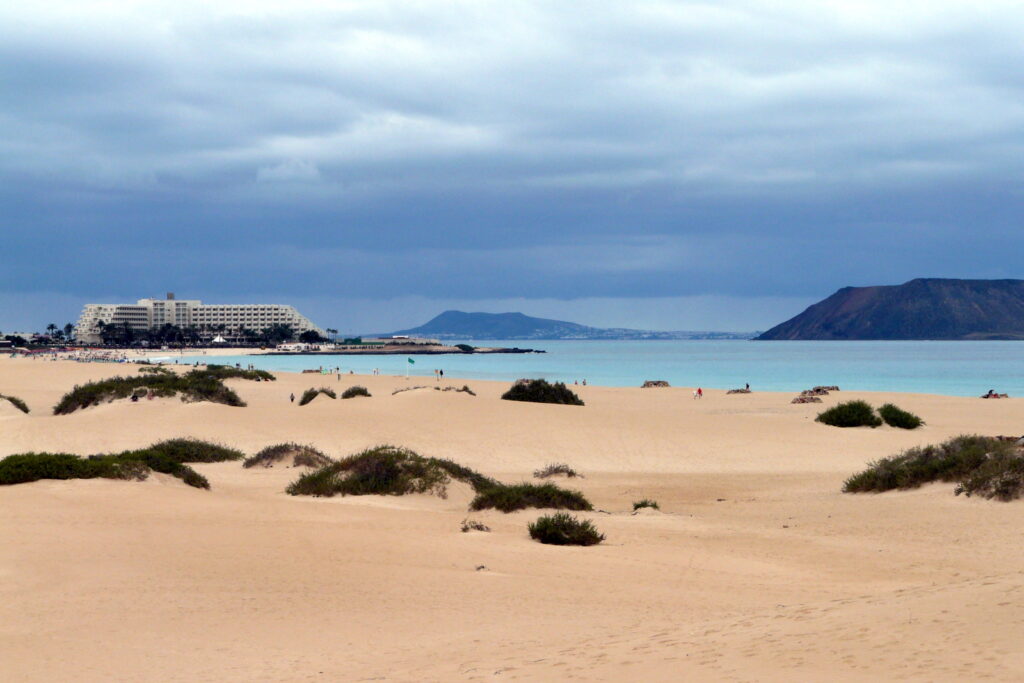
A wind‑sculpted expanse of pale gold dunes stretching along Fuerteventura’s north‑eastern coast, framed by the Lobos Island channel and the volcanic cones behind Corralejo. Shaped by trade winds and marine sand blown inland, it remains one of the island’s most striking open landscapes.
The dunes begin almost at the edge of Corralejo itself, where the town’s last streets give way to a rolling sea of pale sand that runs south along the coast road toward the Grandes Playas. This is Fuerteventura at its most elemental: a wide corridor of dune and beach pressed between the Atlantic and a backdrop of low, dark volcanic cones.
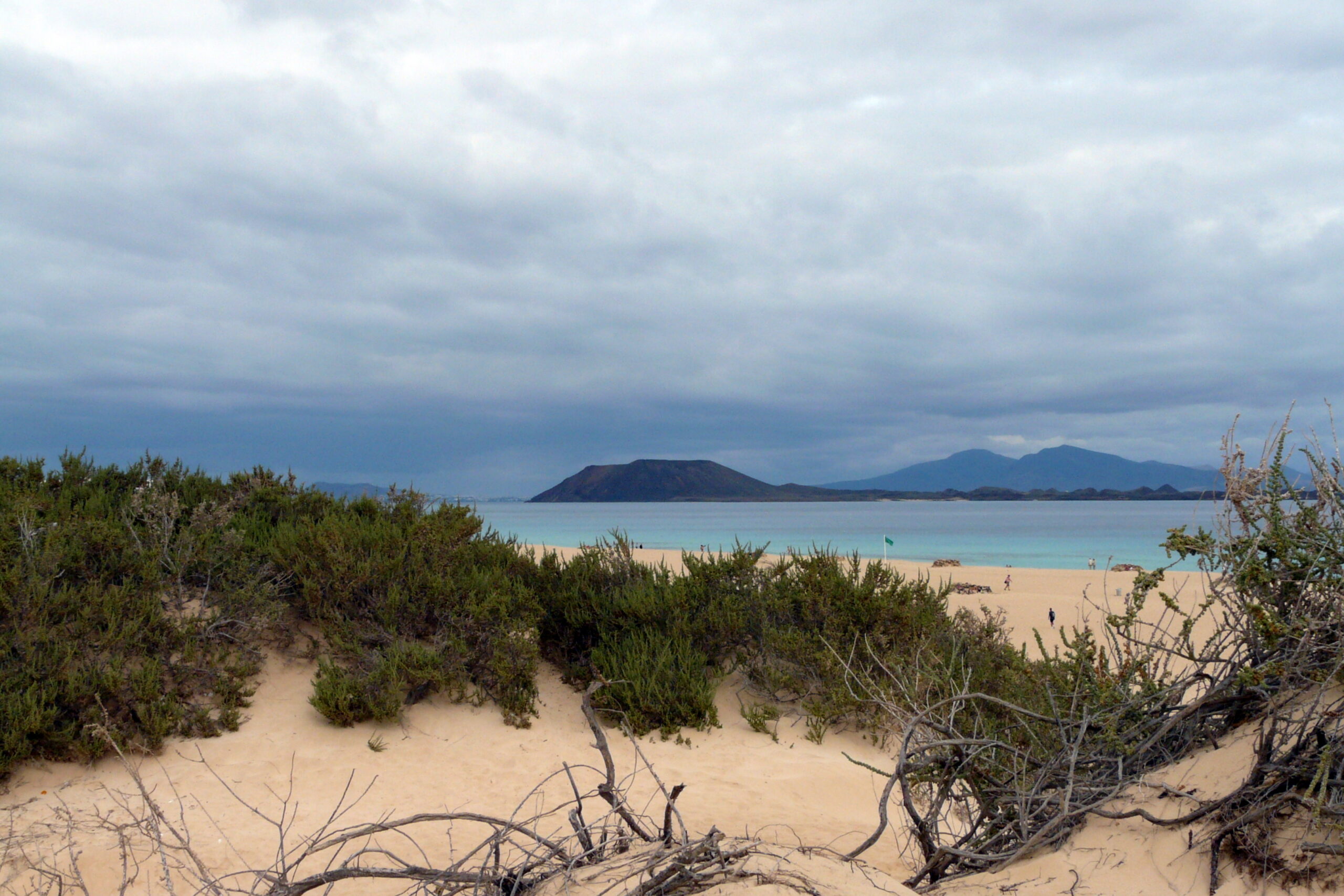
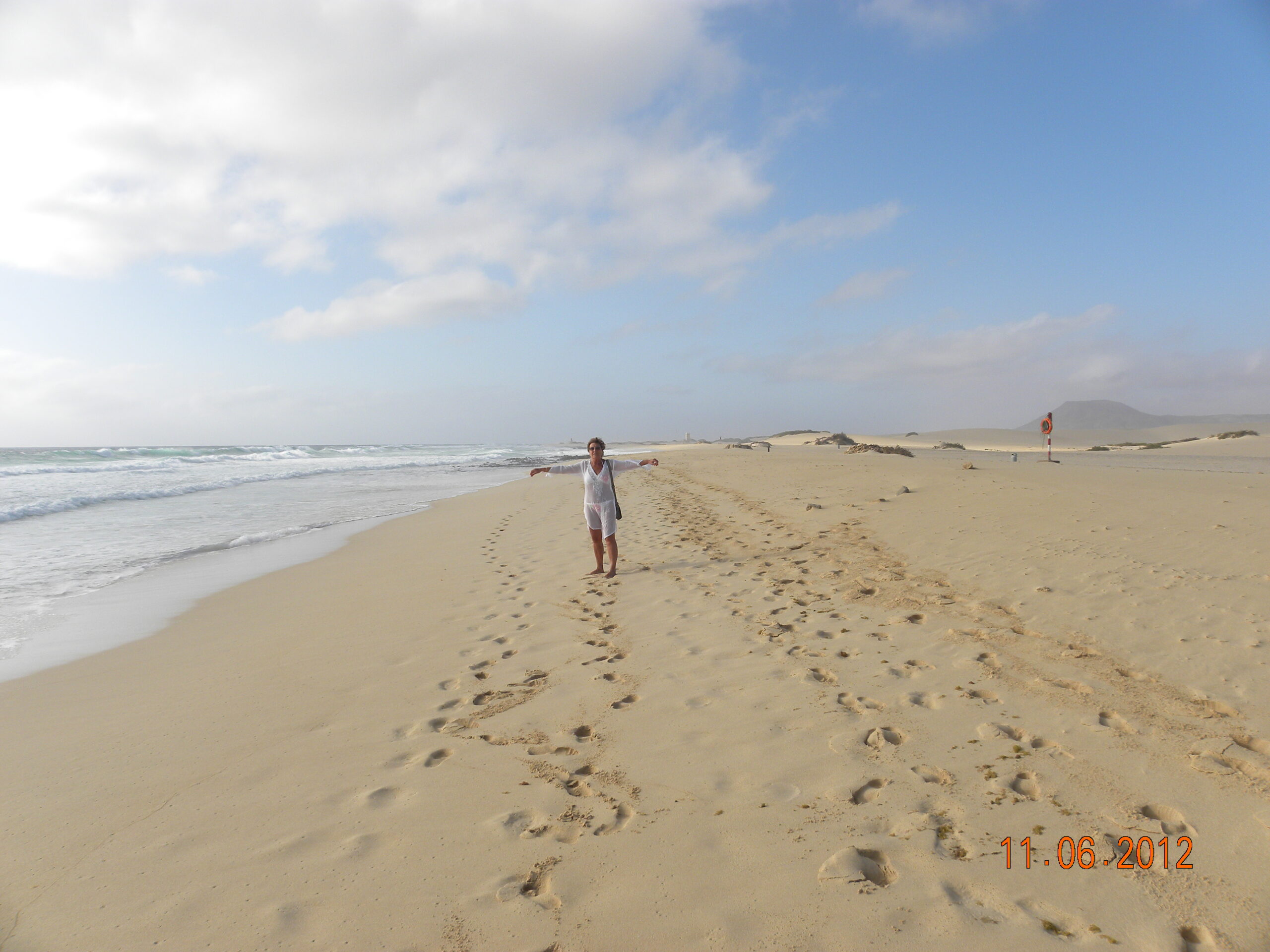
The sand is largely marine in origin — ground shell and coral fragments carried up from the shallow channel between Fuerteventura and Isla de Lobos. Trade winds drive this material inland, shaping it into ridges and hollows that migrate slowly across the landscape. Tamarisk, tabaiba and saltbush cling to the more stable margins, while the open sand supports birdlife typical of the island’s arid coastal habitats.
Vegetation here is sparse and low, adapted to salt spray, drought and constant sand movement: scrubby, ground-hugging plants that colonise the more stable margins of the dune system while the open sand stays largely bare. The exposure that makes plant life difficult is the same quality that defines the walking experience — few natural windbreaks, wide horizons, and a near-constant sound of wind over sand.
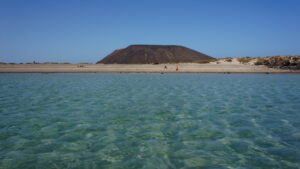
The scale of the dunes, with Lobos and Lanzarote visible across the water, gives the area a bare, almost desert character rare elsewhere in the Canary Islands. Vegetation is sparse, the horizon wide, and the light sharp, especially in the middle of the day when the sand reflects the sun with near‑Saharan intensity.
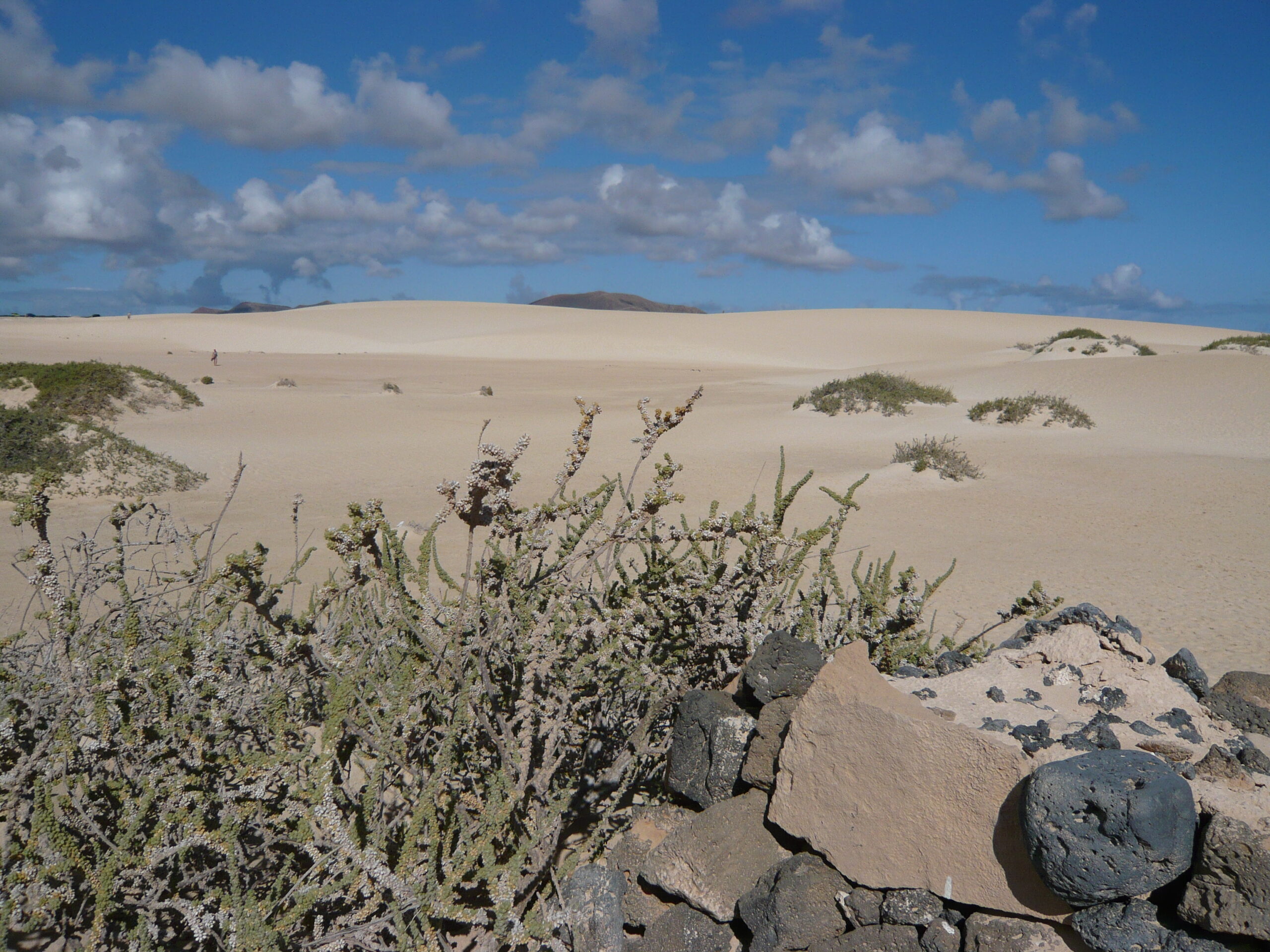
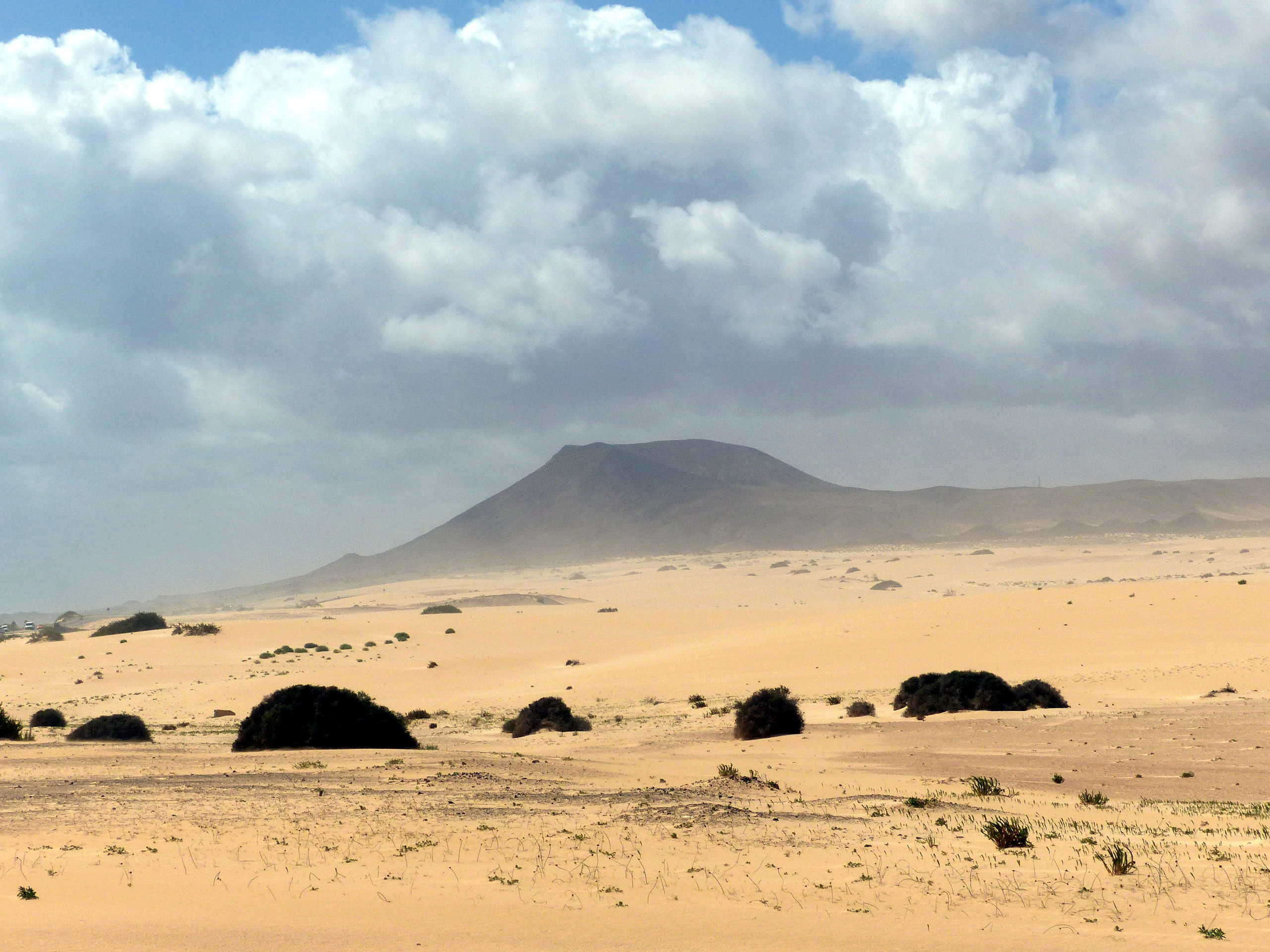
Walking across the dunes is straightforward, though the wind and heat can be intense. Loose sand slows progress, and the exposed beach fronting the dunes draws windsurfers and kitesurfers who rely on the steady breezes that define this coast. For others, the appeal lies in watching the light shift over the sand or looking out toward the neighbouring islands from one of the higher ridges.