
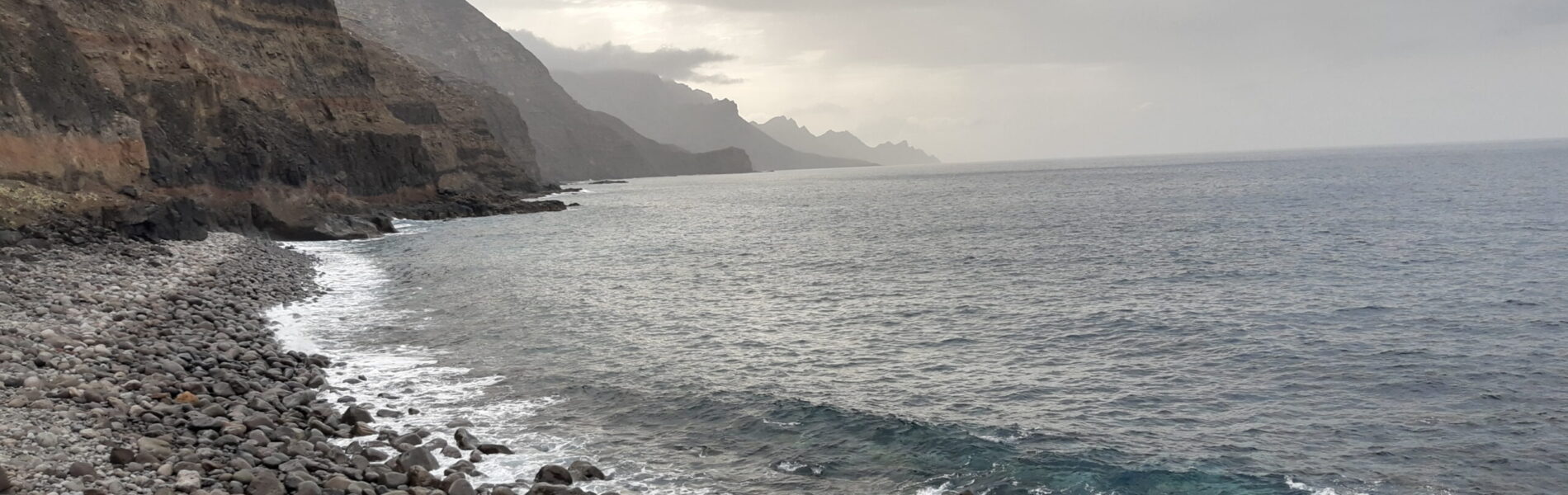
A remote volcanic beach at the mouth of the Barranco de Guayedra, reached by an unpaved track along Gran Canaria’s northwest coast. Framed by the towering cliffs of Andén Verde and the Faneque massif, it remains one of the island’s least developed stretches of shore, favoured by those seeking solitude over sunbeds.
Guayedra sits on the wilder side of the Agaete municipality, where the Barranco de Guayedra descends from terraced hillsides and dry ravine scrub to meet the open Atlantic. The approach is part of its character: a rough track drops away from the GC‑200, winding through volcanic terrain before revealing a shoreline that feels cut off from the rest of the island.
The beach is dark and volcanic, a mix of coarse sand, pebbles and rounded stones shaped by the Atlantic’s full exposure. This northwest coast receives little shelter from headlands or bays, and the trade winds funnel along it for much of the year, kicking up a swell that attracts experienced surfers and bodyboarders. Currents can be strong, and the water demands caution — Guayedra is a place to observe the ocean rather than treat it casually.
Above the shoreline, the cliffs rise sharply toward Andén Verde and the Faneque massif, among the highest sea cliffs in Europe. Their scale gives the beach a dramatic, almost amphitheatre‑like quality, with sheer volcanic walls framing the sky and casting shifting shadows across the ravine. Walkers use the surrounding paths as part of longer coastal routes linking Agaete with the villages further east.
There are no facilities, no promenade and no built‑up frontage — only cliff, wind and open ocean. For those who seek it out, that absence is the appeal: a place to watch the light change across the rock faces, listen to the wind move through the barranco, and experience a corner of Gran Canaria that has resisted the tourist development found elsewhere on the island.
🏛 Similar places

🏨 Hotels nearby
No hotels found.