
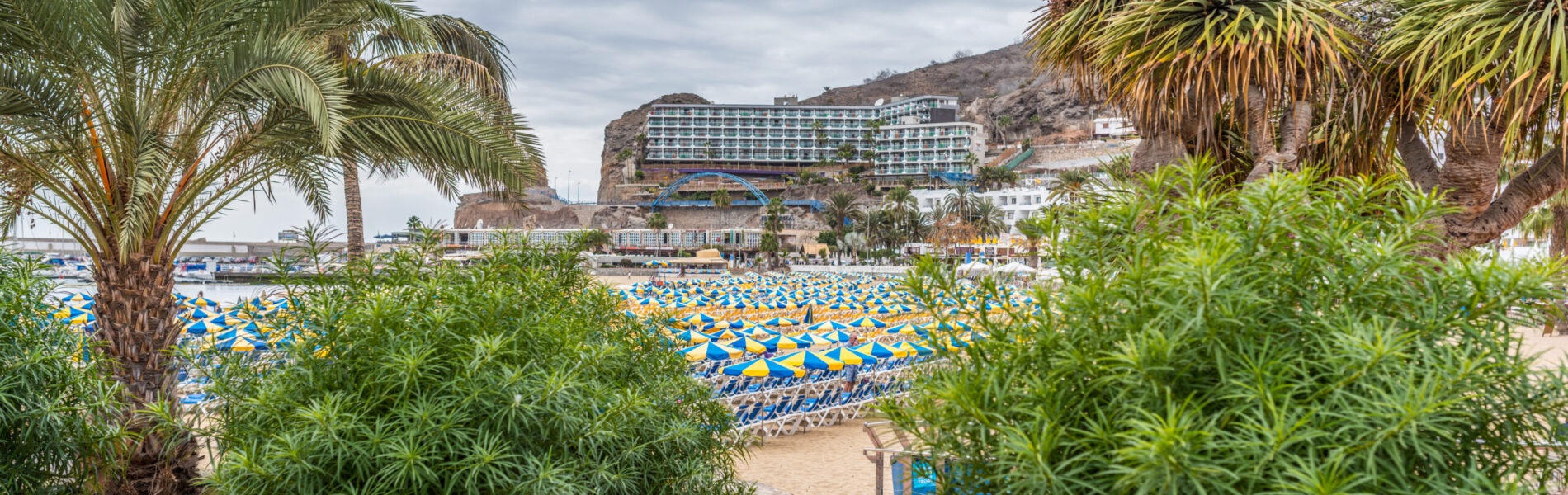
Puerto Rico Beach sits at the mouth of a steep barranco on Gran Canaria’s arid south‑west coast, ringed by the terraced apartment blocks of the resort that shares its name. Hills close around the bay on three sides, cutting the wind and keeping the water notably calm, a quality that has shaped the whole character of the settlement above it.
Puerto Rico Beach lies where a dry ravine descending from Gran Canaria’s interior meets the Atlantic, on the south‑western flank of the island within the Mogán municipality. This coast sits deep in the rain shadow of the central peaks, giving it a hard, bright light and slopes of bare volcanic rock that rise steeply behind the developed shoreline.
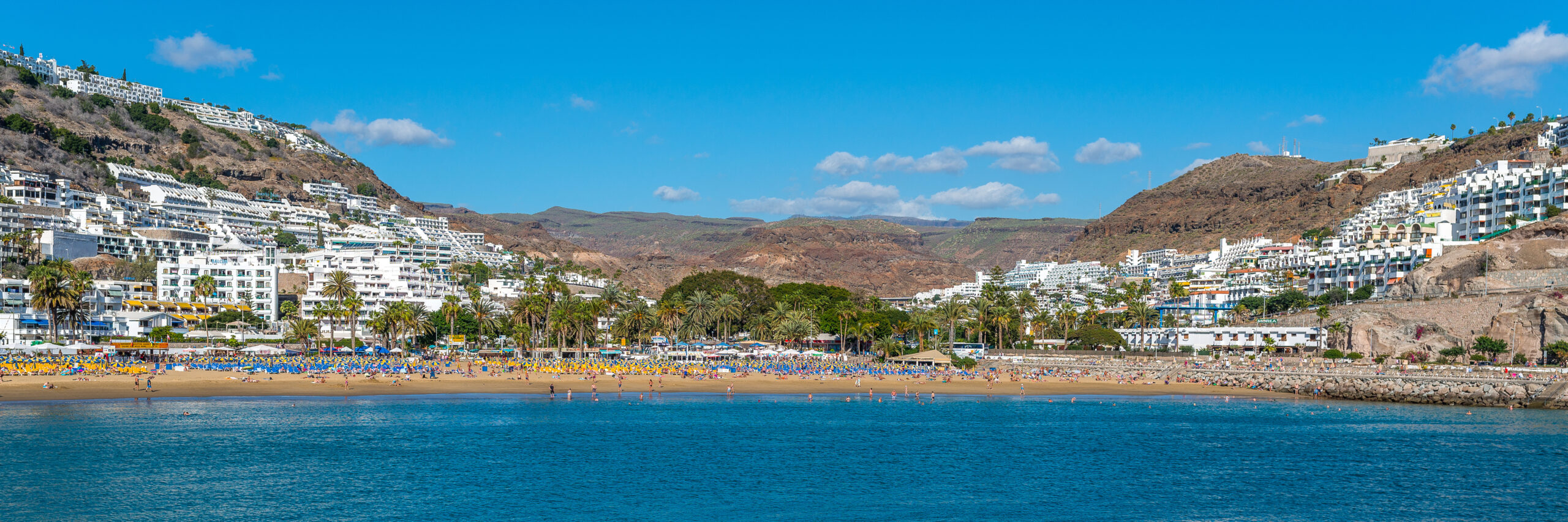
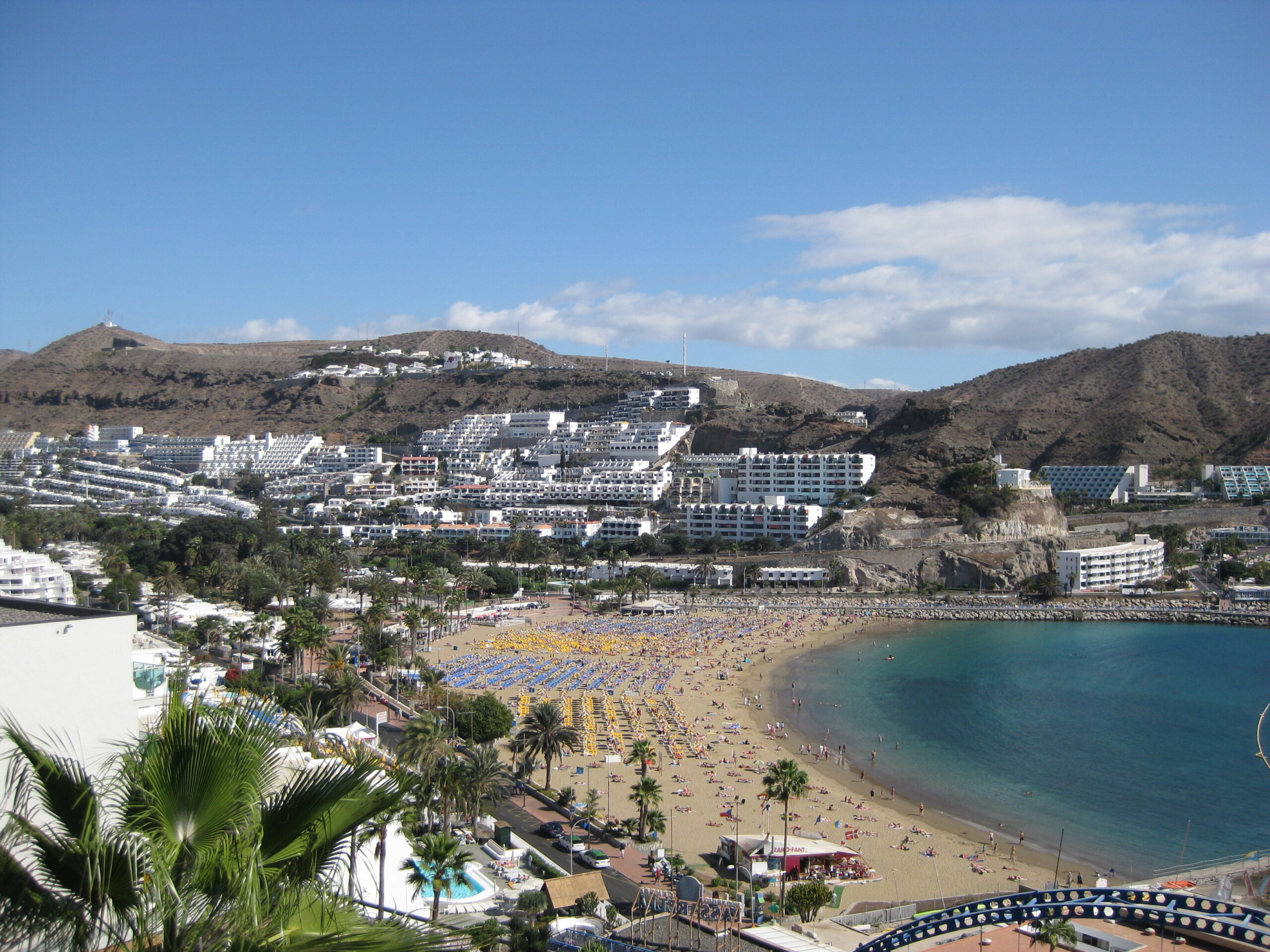
The defining feature of the beach is its shape. The surrounding hills curve tightly around the bay, forming a natural amphitheatre that blocks much of the trade wind that reaches other parts of the south coast. As a result, the water stays unusually calm for long stretches of the year — a sheltered pocket of Atlantic that feels markedly different from the more exposed beaches further east.
That shelter is the reason the resort grew here. Terraced apartment blocks climb the hillsides in stacked layers, each tier angled toward the bay to catch the sun and the still water below. From the sand, the topography is easy to read: the barranco narrows inland, the town thickens along its lower reaches, and the coastline opens out where the ravine finally meets the sea.
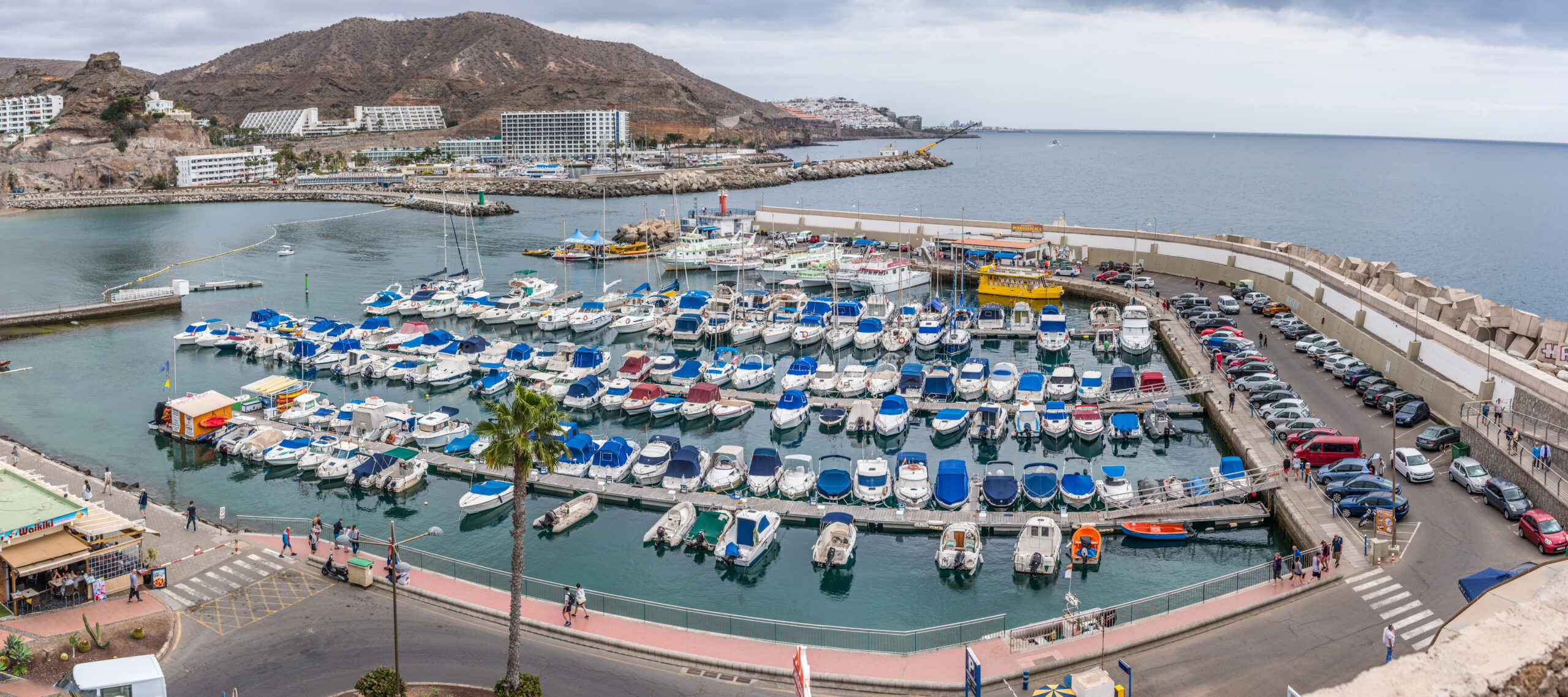
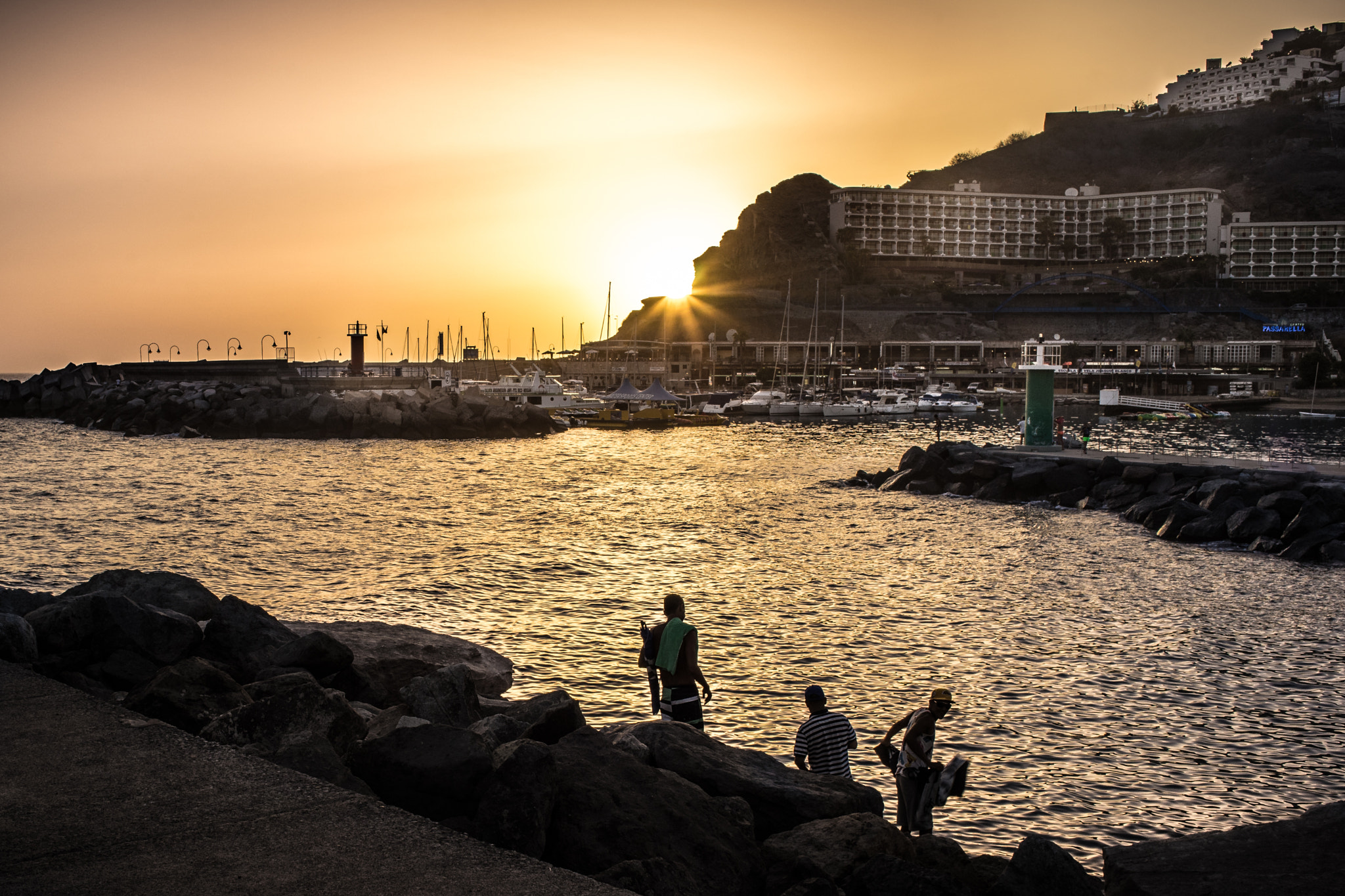
The beach acts as the flat, central heart of the resort — a broad crescent of sand with calm swimming conditions, boat excursions departing from the nearby marina, and a promenade that follows the curve of the bay. Inland, the dry barranco offers a quieter contrast, its stony course climbing away from the coast into the volcanic terrain typical of Gran Canaria’s south‑west.
For visitors, the appeal lies in the combination of shelter, sunshine and scale: a beach protected from wind, set within one of the island’s warmest micro‑climates, and framed by the dramatic slopes that define this part of Mogán.
🏛 Similar places


🏨 Hotels nearby
No hotels found.