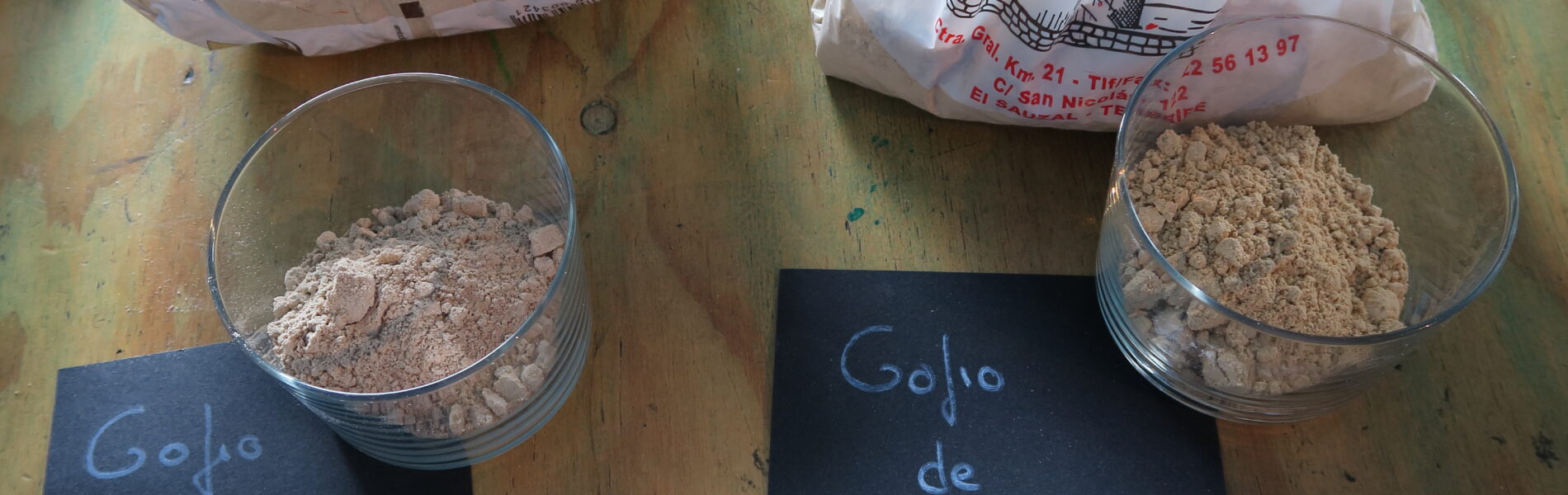
Gofio is one of the oldest and most distinctive ingredients in Canarian cuisine — a roasted grain flour made from toasted maize, wheat or a blend of cereals. Its origins stretch back to the Indigenous Guanche people, who relied on gofio as a staple long before the arrival of European settlers.
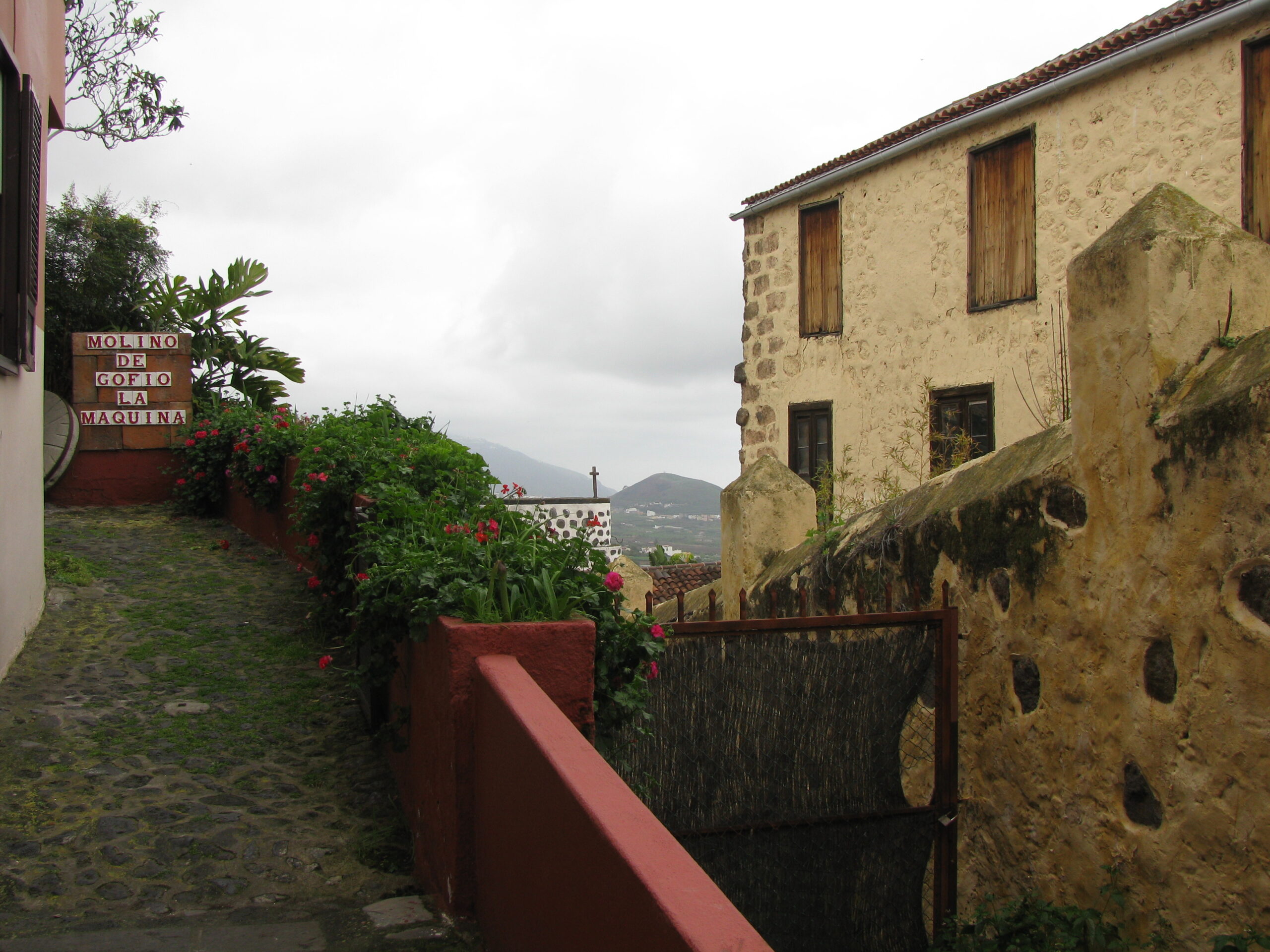
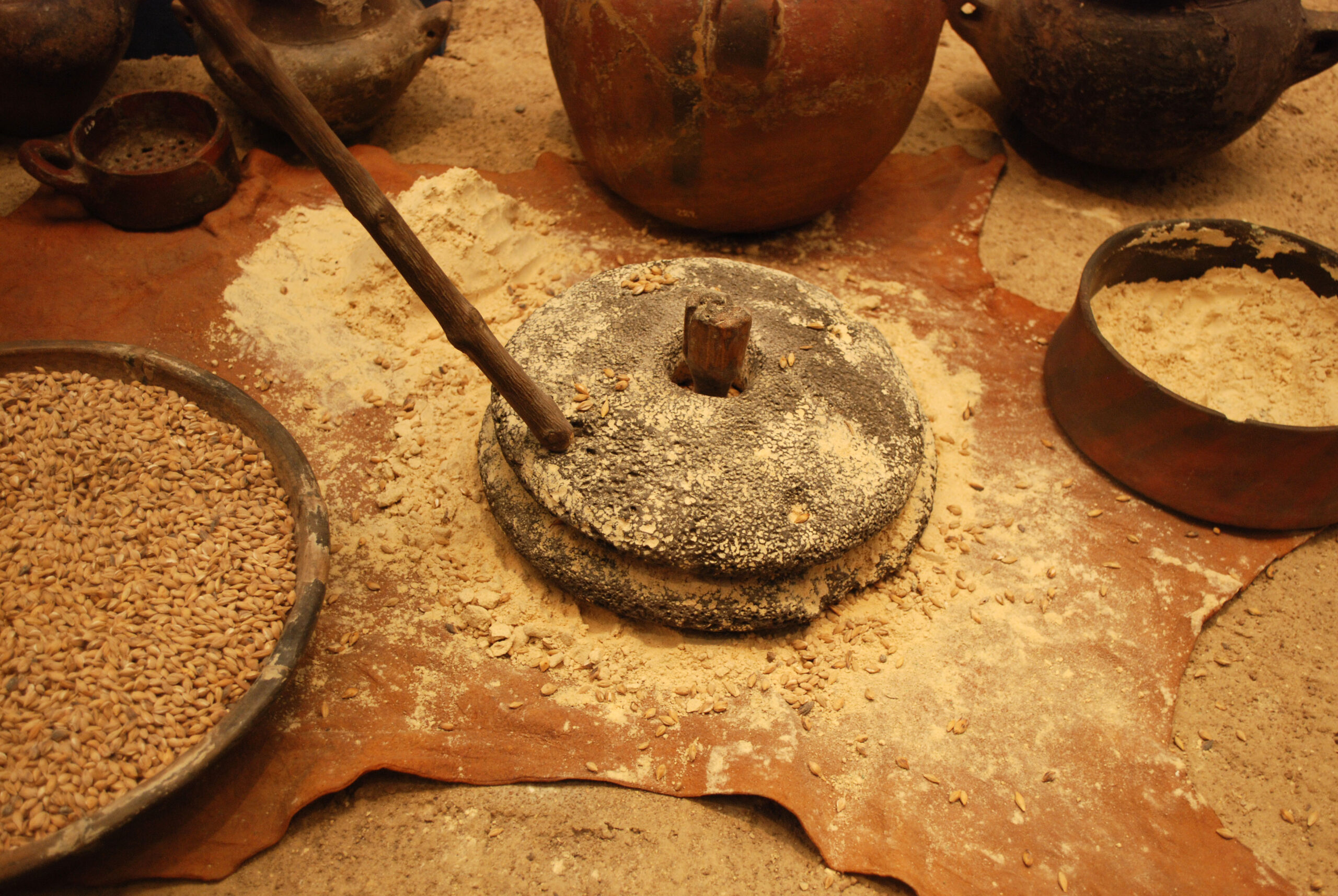
The roasting process gives gofio its warm, nutty flavour and long shelf life. Once ground, it becomes a versatile ingredient used in both savoury and sweet dishes. Families across the islands keep it in their kitchens much like flour or sugar, adding it to meals for texture, nutrition and tradition.
In everyday cooking, gofio is stirred into milk for breakfast, mixed with broth to thicken stews, or sprinkled over soups and vegetables. It also appears in pella de gofio, a dense, dough‑like preparation often served with fish or cheese.
Modern restaurants have embraced gofio as well, using it in ice creams, mousses and creative desserts that highlight its toasted character. Despite these contemporary uses, the ingredient remains deeply tied to Canarian identity — a link between past and present, home cooking and innovation.
For visitors exploring the archipelago’s food culture, gofio offers a direct connection to the islands’ history. Simple, nourishing and unmistakably local, it is one of the flavours that define the Canary Islands.