Haría Village
Lanzarote’s Northern Palm Oasis Beneath the Corona Volcano
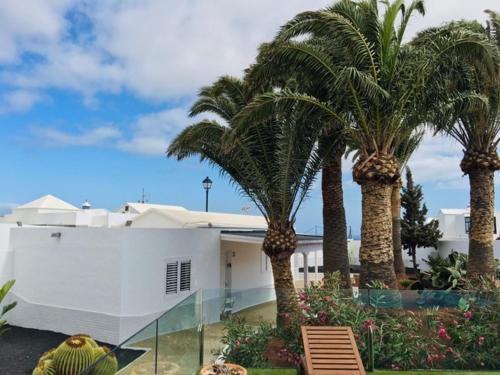
Haría is Lanzarote’s northern inland village, set in a sheltered valley filled with palm groves, whitewashed houses and volcanic slopes rising toward the Corona Volcano. Its quiet rhythm, traditional architecture and green landscape make it one of the island’s most distinctive inland settlements.
Haría lies in a sheltered valley on Lanzarote’s northern side, a landscape shaped by volcanic ridges, palm groves and the cooler microclimate that distinguishes this part of the island. The village sits beneath the Corona Volcano, whose lava flows created the long tubes that form Cueva de los Verdes and Jameos del Agua along the coast.
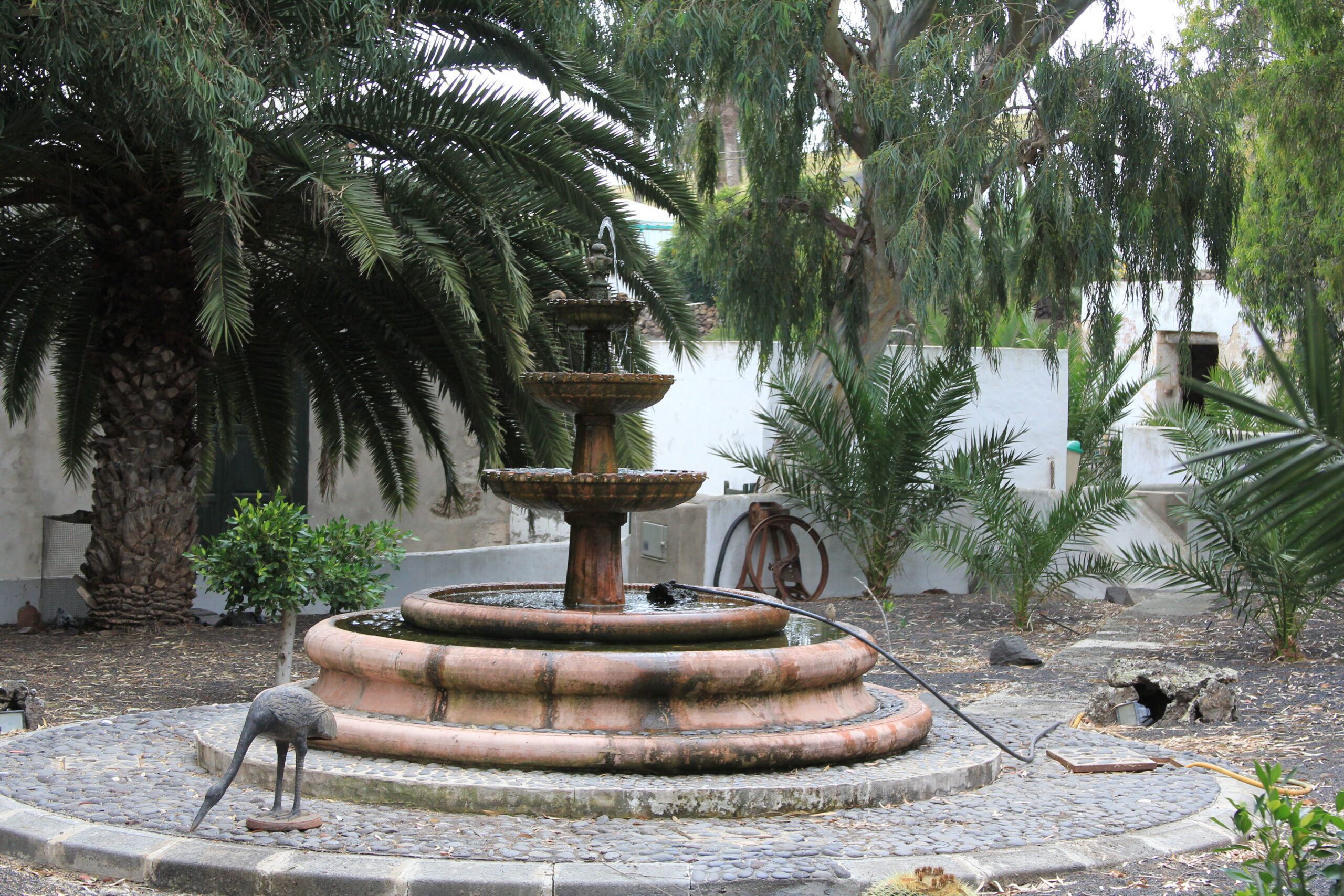
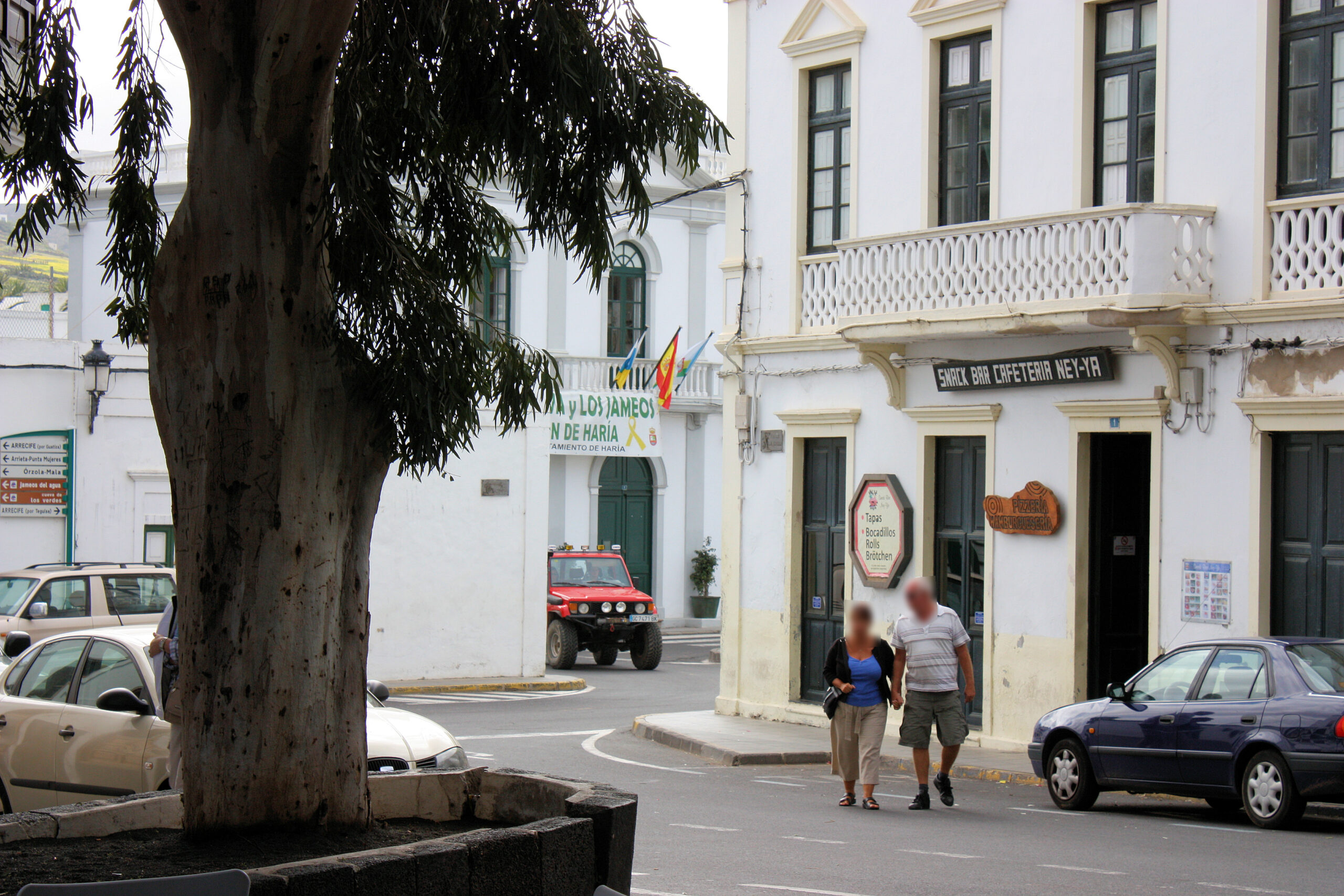
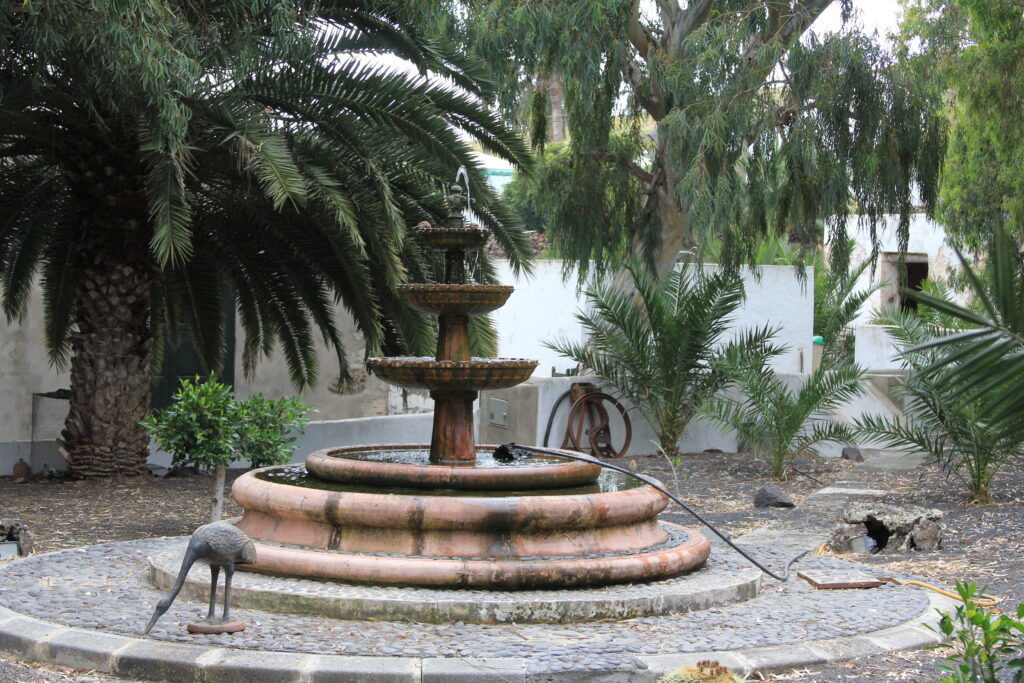
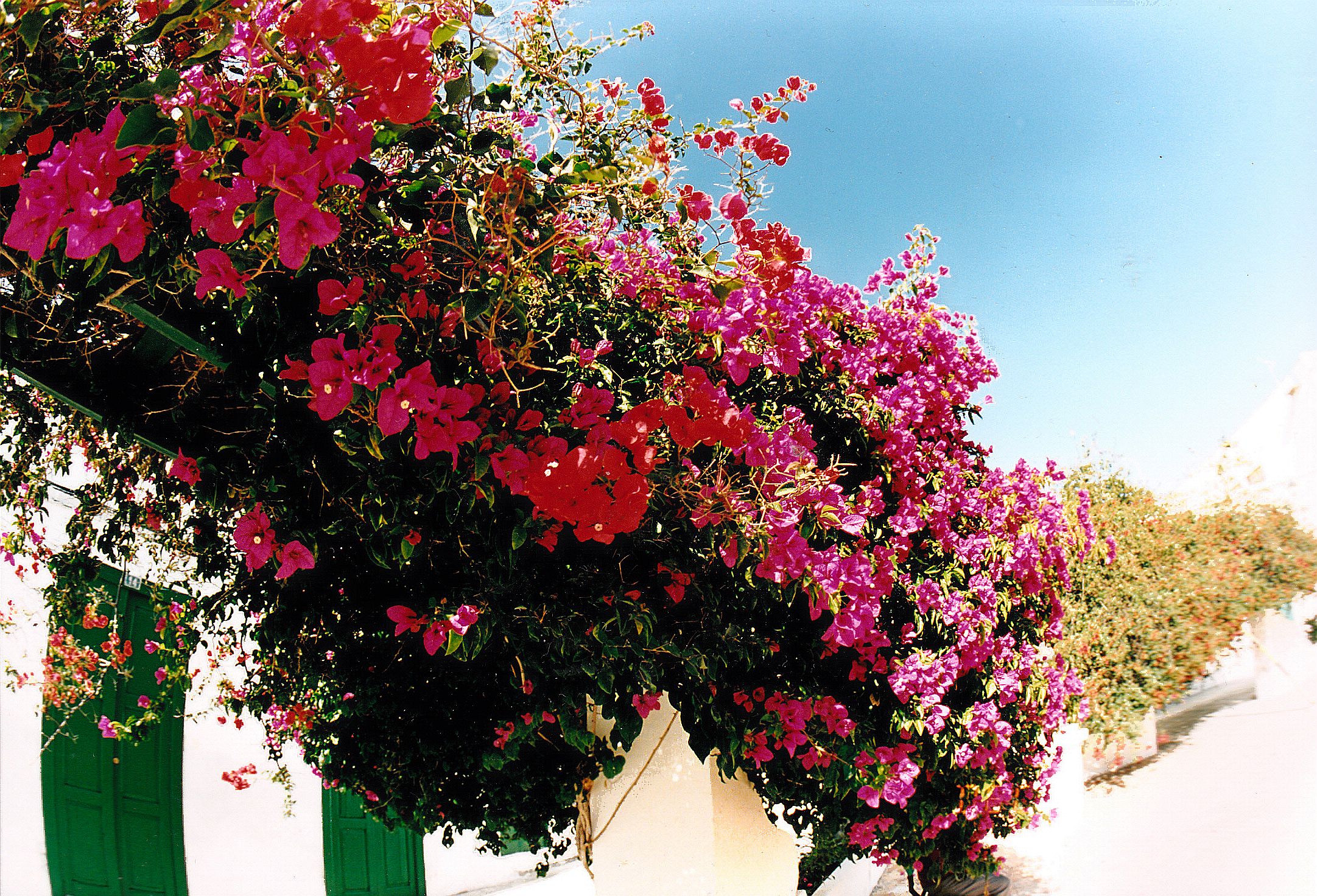
The centre of Haría follows a traditional pattern: whitewashed houses, narrow lanes and a central plaza shaded by palms. The abundance of palm trees gives the valley its nickname, the “Valley of a Thousand Palms,” a result of historic planting traditions and the area’s slightly cooler, more humid conditions compared with the south.
Architecture remains low‑rise and understated, with volcanic stone detailing and simple facades that reflect Lanzarote’s inland heritage. Small workshops, craft studios and local cafés line the streets, giving the village a quieter rhythm than the island’s coastal resorts.
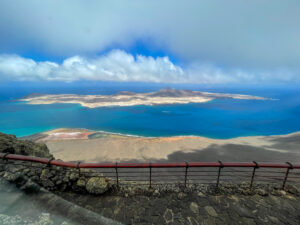
Looking outward, the terrain rises toward the Corona Volcano and the northern cliffs that lead to Mirador del Río. These slopes catch cloud and moisture from the trade winds, feeding the valley’s greenery and creating a sharp contrast with the dry malpaís landscapes further south.
Haría’s position makes it a natural inland base for exploring northern Lanzarote — from volcanic tubes and rugged coastlines to viewpoints overlooking the Chinijo Archipelago. Despite its importance, the village retains a calm, traditional feel shaped by landscape, climate and long‑standing agricultural patterns.