Timanfaya National Park
Lanzarote's Fire Mountains
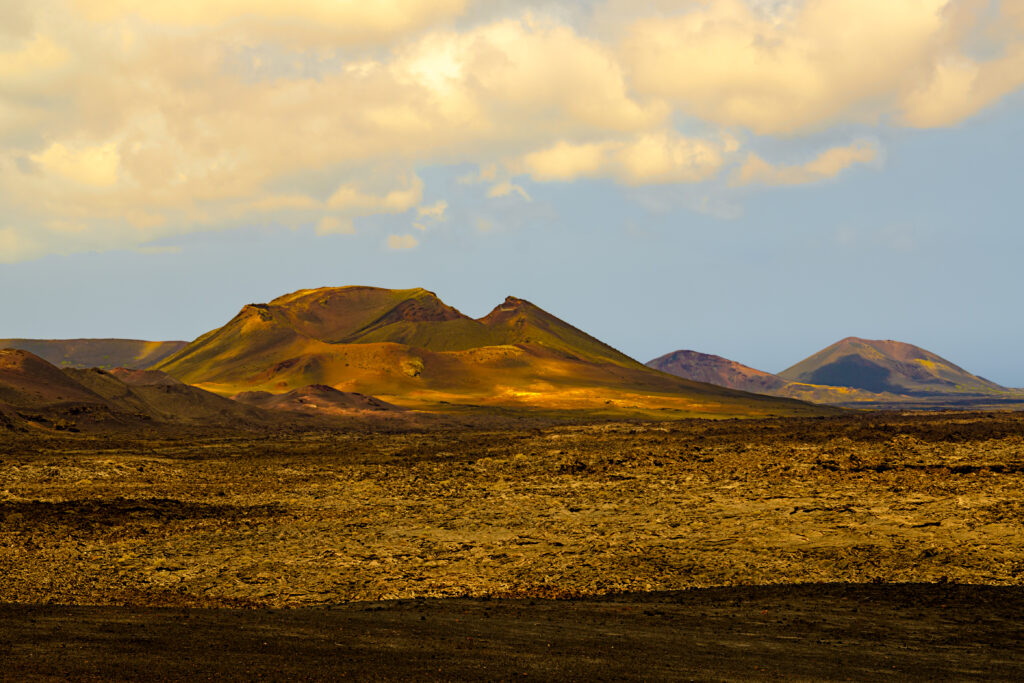
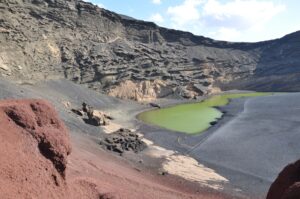
Timanfaya National Park occupies the volcanic core of southern Lanzarote, a terrain of cinder cones, lava fields and mineral colours shaped by the island’s eighteenth‑century eruptions. Rust‑red, ochre and charcoal‑black peaks rise from a landscape almost devoid of vegetation, giving the park its reputation as one of the most otherworldly places in the Canary Islands.
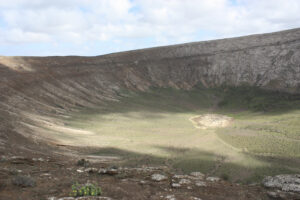
Timanfaya National Park covers the volcanic heart of southern Lanzarote, where the island’s most dramatic eruptions took place between 1730 and 1736. The terrain is built almost entirely from cinder, ash and hardened lava — locally known as malpaís — folded into cones, craters and fissures that stretch toward the horizon in shades of black, deep red and ochre.
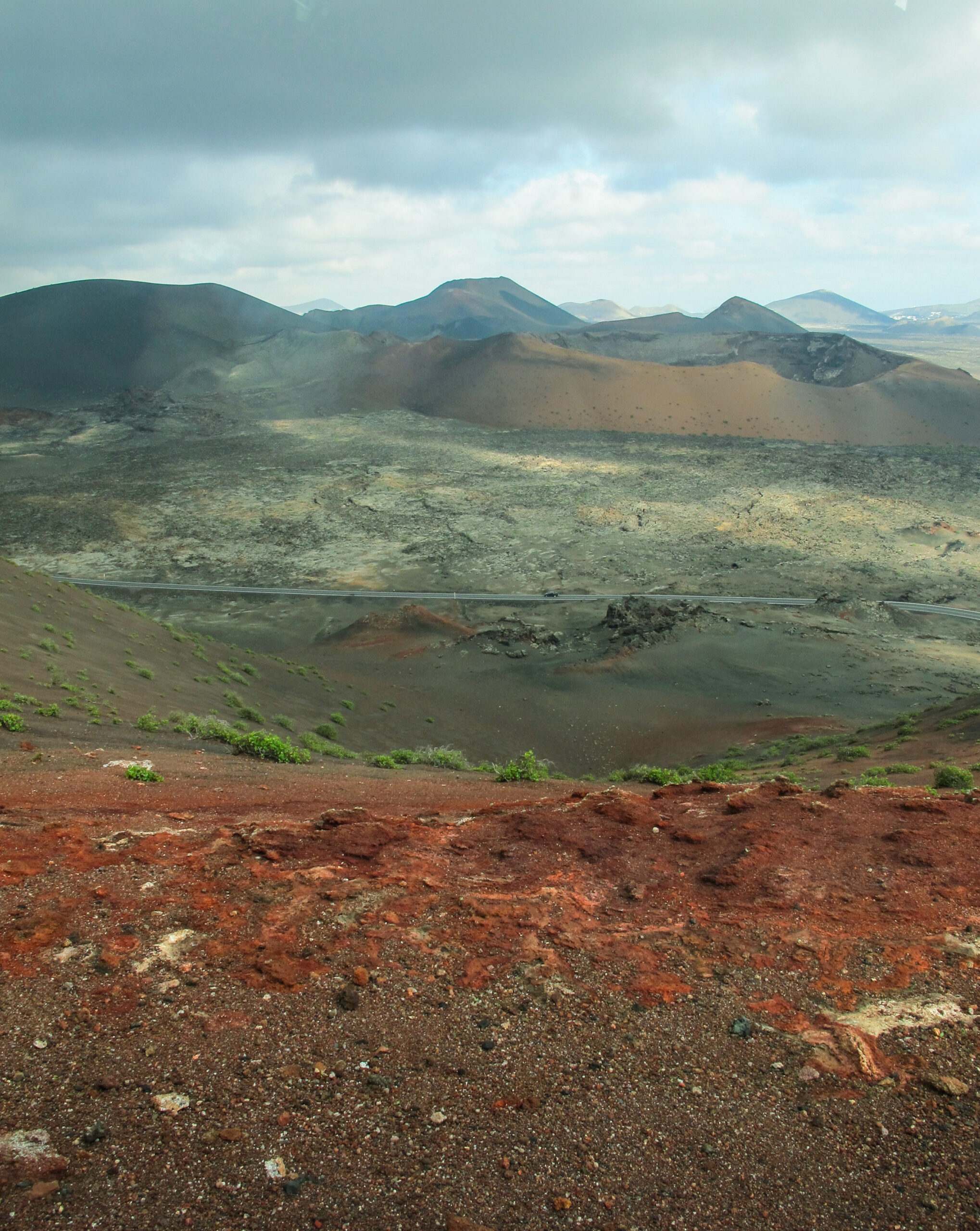
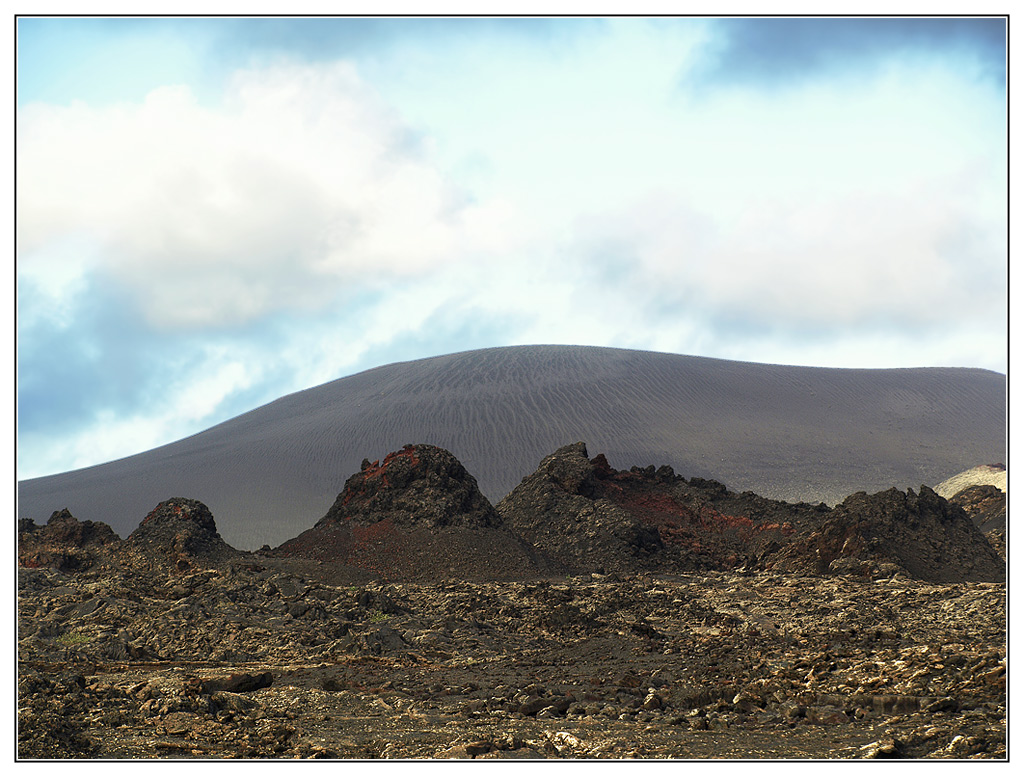
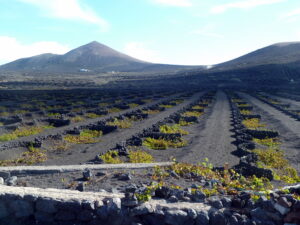
Vegetation is scarce. The absence of soil and Lanzarote’s dry, wind‑scoured climate have kept the landscape close to its original volcanic state, with lichens the main sign of life clinging to the rock. Trade winds sweep freely across the open cones, carrying fine volcanic dust and giving the air a mineral, sun‑baked quality even in cooler months.
Beneath the surface, the ground still carries heat — a legacy of the eruptions that reshaped this region. In pockets across the park, warmth rises close enough to the surface to be felt directly, a reminder that Timanfaya is not just a geological exhibit but a landscape where volcanic energy still lingers.
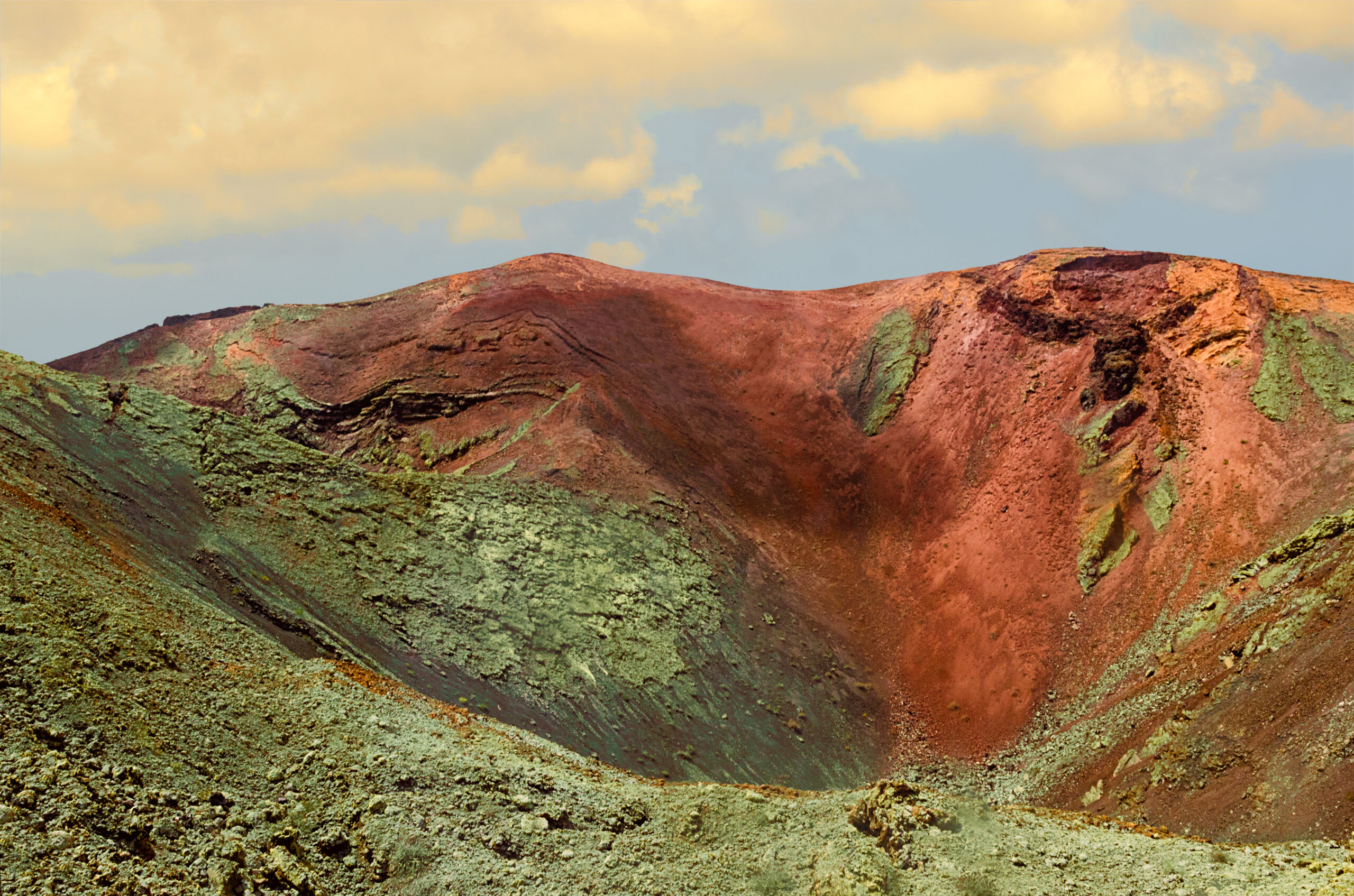
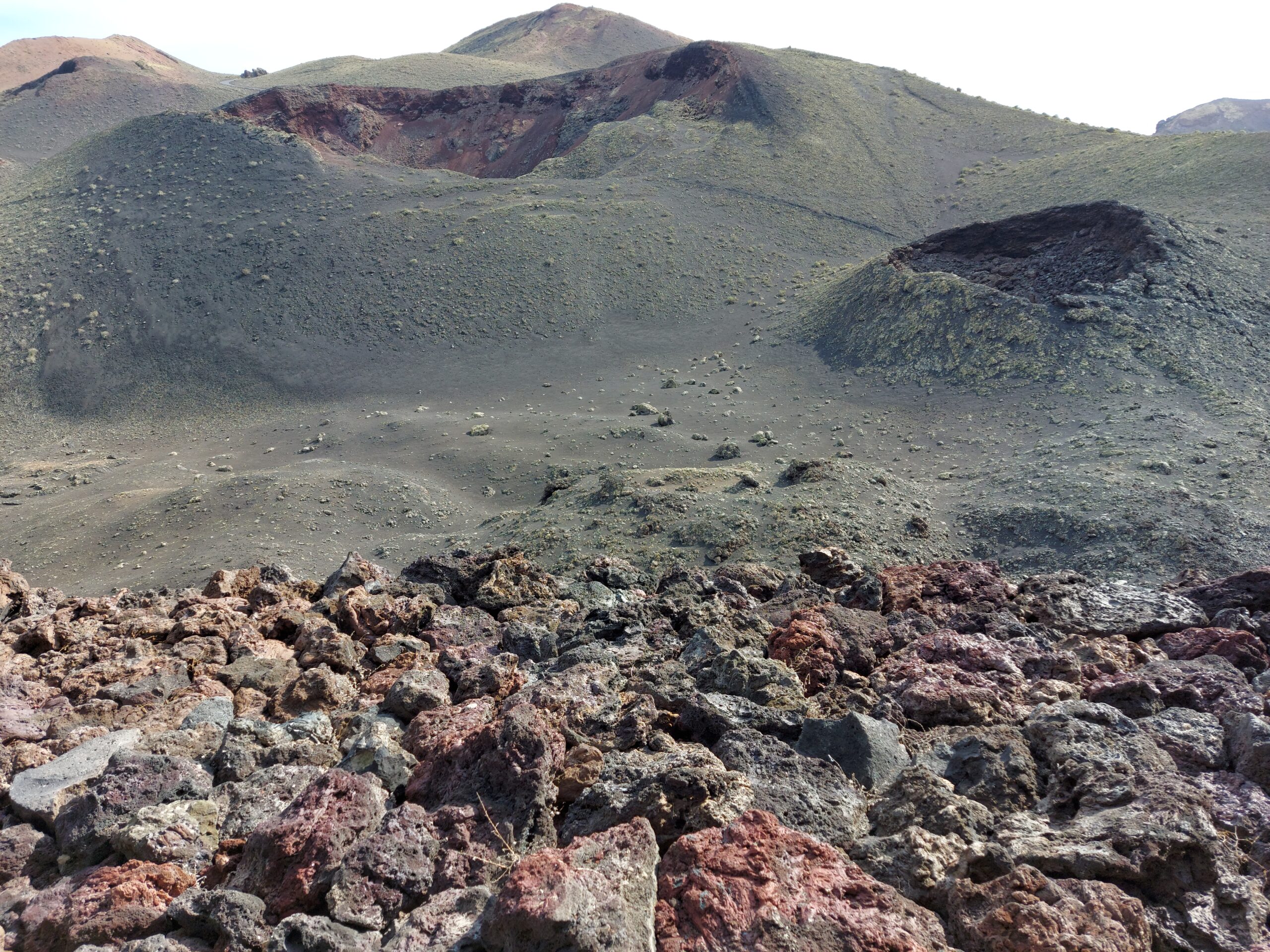
Timanfaya’s scale and silence are as striking as its colour. Standing here means being inside a volcanic system rather than viewing one from a distance, with the Fire Mountains forming one of the most complete and legible eruption fields in the Canary Islands.