
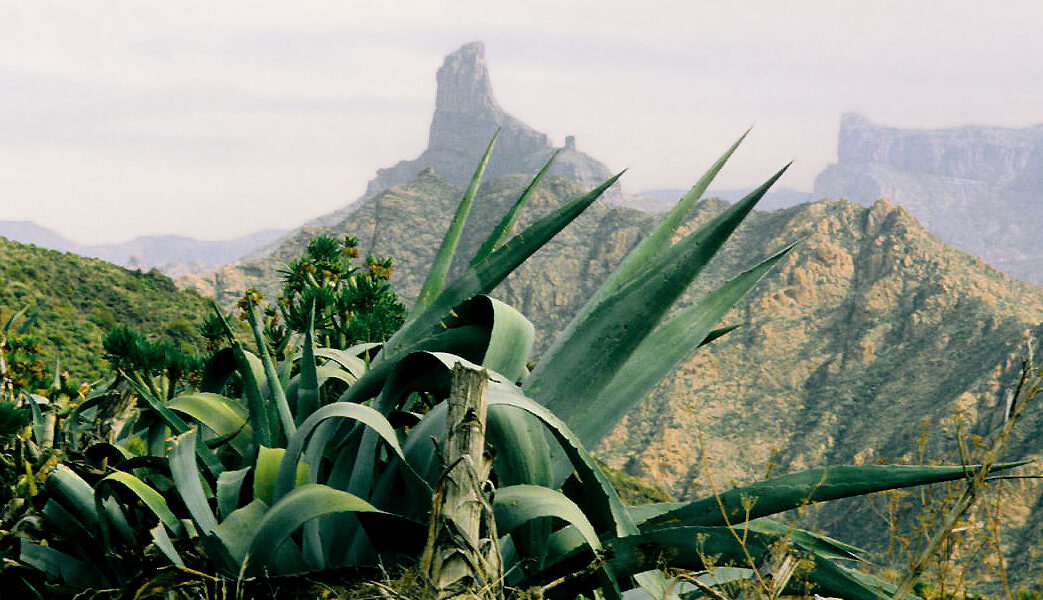
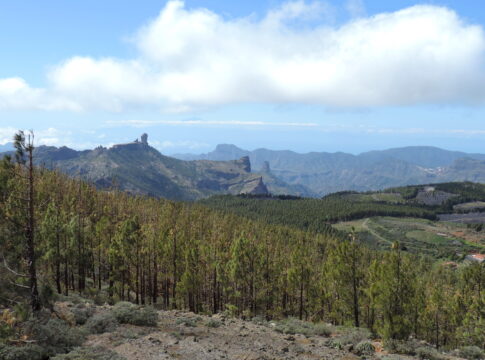
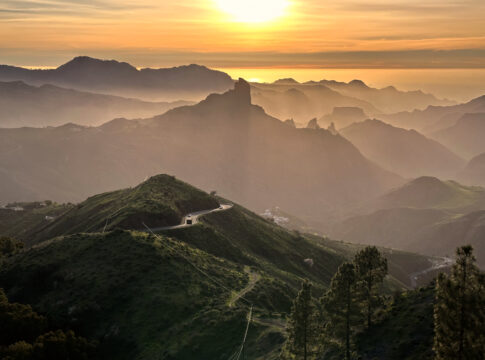
A volcanic plug rising from the floor of the Tejeda caldera, Roque Bentayga is one of Gran Canaria’s great inland viewpoints, its bare rock long associated with the island’s pre‑Hispanic inhabitants. From its slopes the caldera opens out in full, ringed by pine‑clad peaks and worn basalt cliffs.
Roque Bentayga rises from the centre of the Tejeda caldera, a vast eroded basin at the heart of Gran Canaria. It is a volcanic plug — the hardened core of ancient magma left standing after softer rock around it weathered away — and its abrupt, vertical form anchors the landscape of pine forest, terraced slopes and exposed basalt.
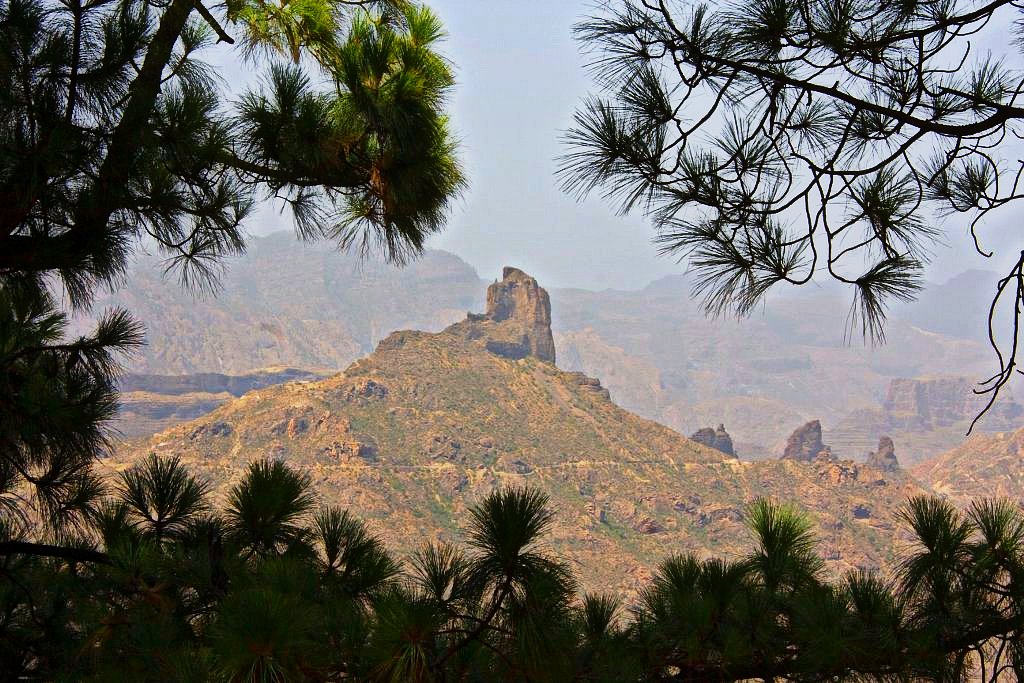
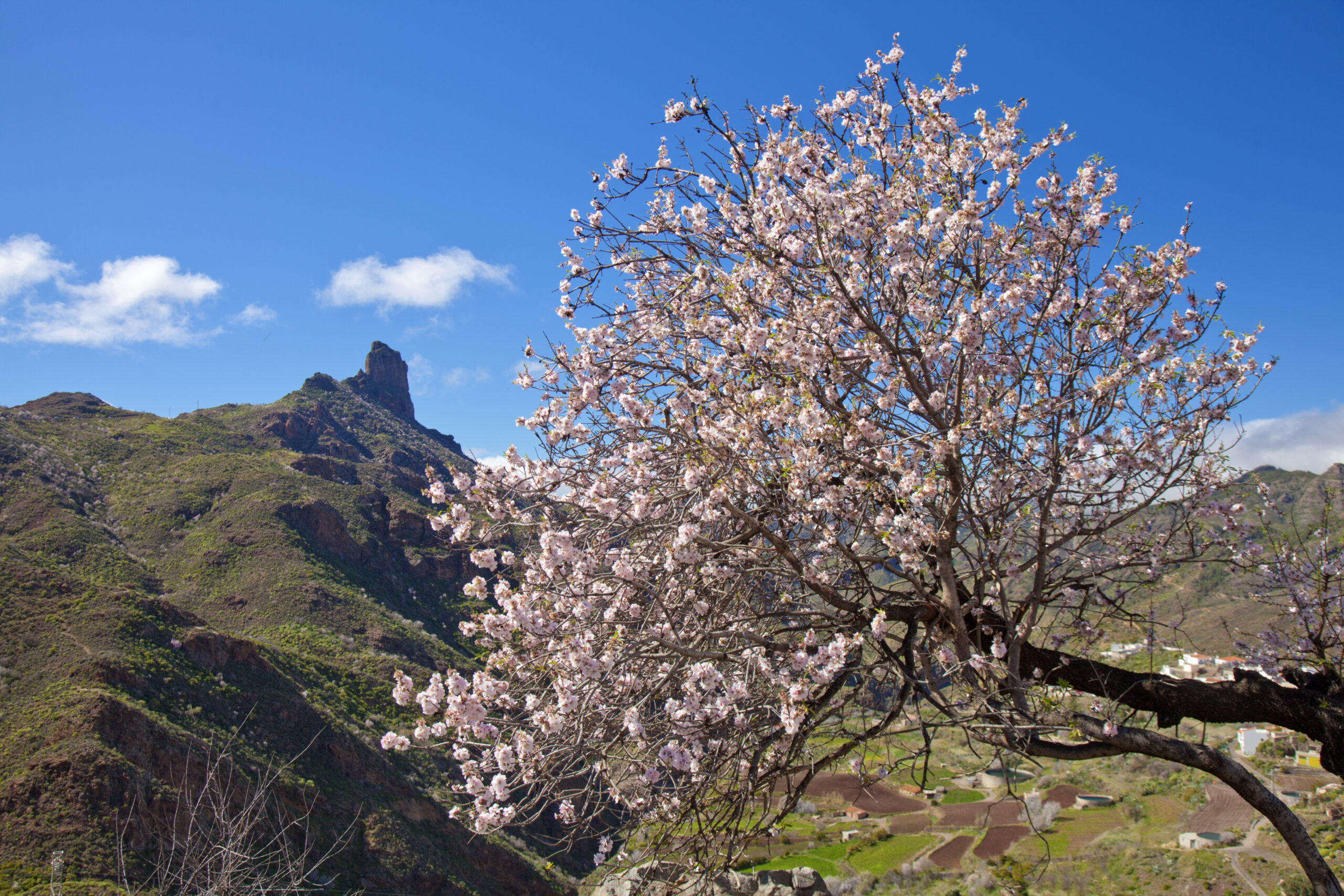
Approaching Bentayga means climbing through Tejeda’s characteristic terrain: almond orchards on the lower ground, Canary pine higher up, and the broken rim of the caldera visible ahead as a ring of jagged peaks. Tracks lead toward the base of the rock, where paths weave between boulders and low scrub before reaching viewpoints cut into the slope.
The rock and its surroundings hold deep cultural significance. The island’s pre‑Hispanic inhabitants used this elevated terrain for settlement and ritual, leaving cave dwellings, carved features and traces of ceremonial activity in the Bentayga complex. That history adds weight to a place already shaped by dramatic geology, where bare stone and open sky dominate over any human addition.
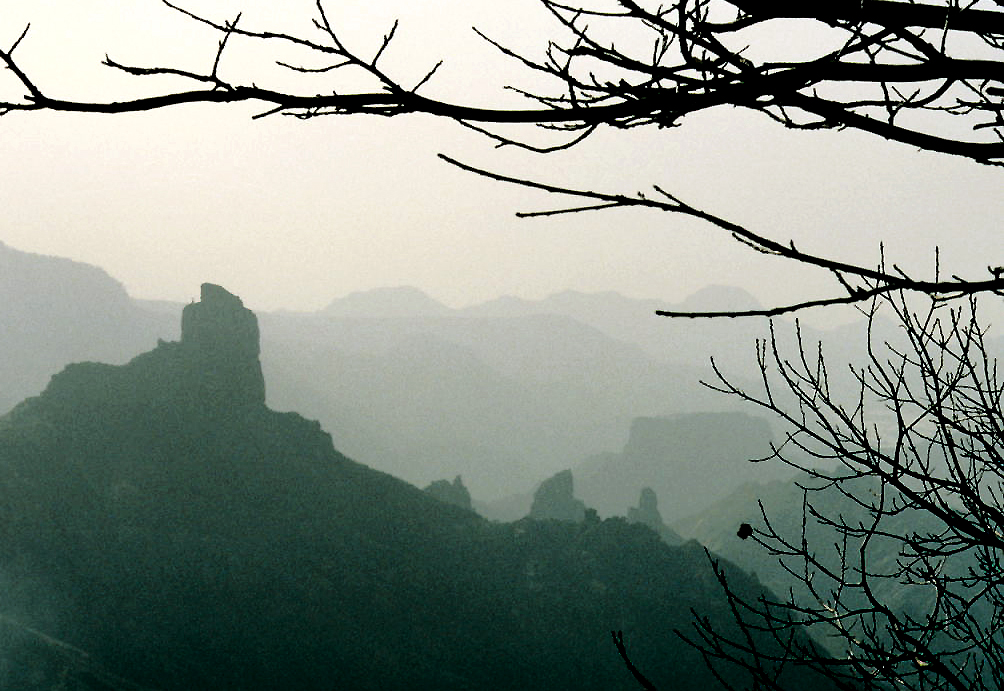
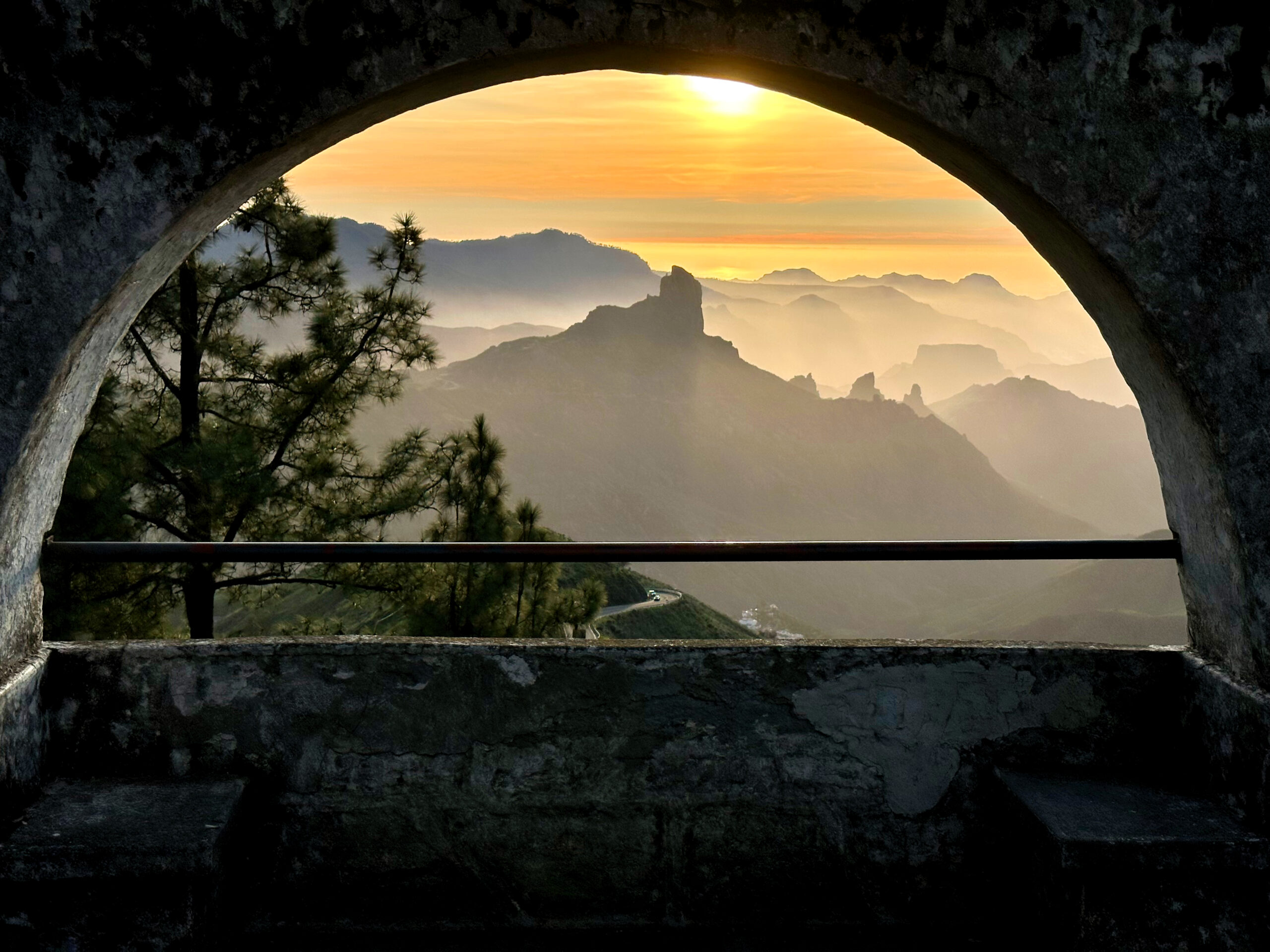
Most visitors come for the view. From the vantage points around Bentayga, the caldera unfolds in full: an amphitheatre of eroded ridgelines, pine‑darkened slopes and volcanic walls. On clear days, Mount Teide rises on the horizon across the strait. In the afternoons, cloud often gathers below, pushed inland by trade winds and pooling in the valleys while the summit stays in sun — giving Bentayga a floating, island‑like presence above the caldera floor.
🏛 Similar places
🌿 Worth a detour


🏨 Hotels nearby
No hotels found.