Fuencaliente Volcanoes
Where La Palma’s Ridge Meets the Sea
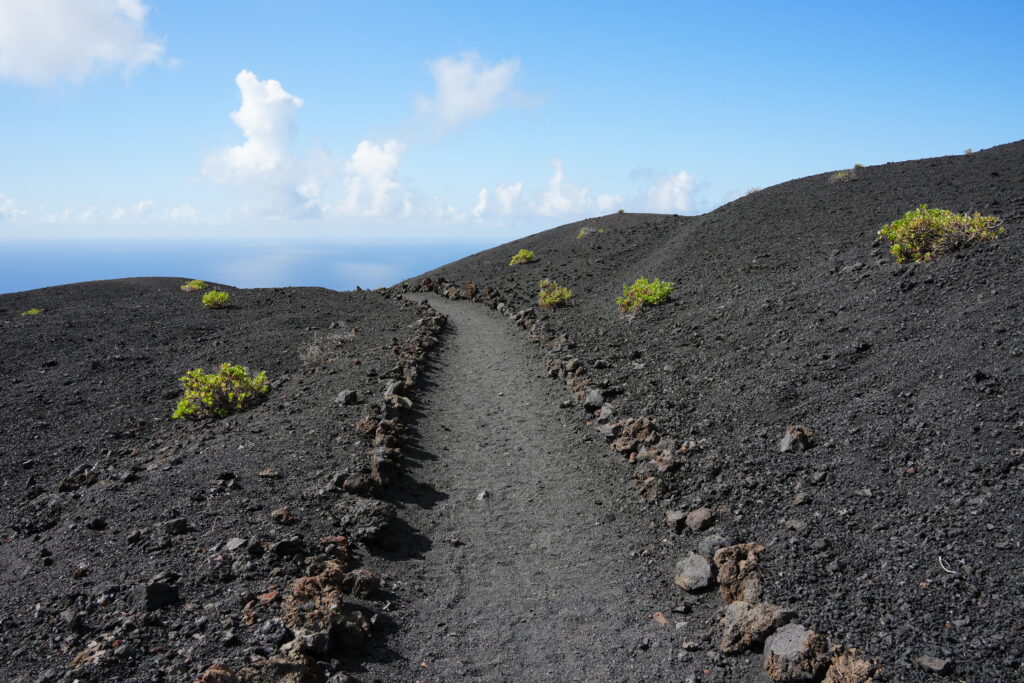
The Fuencaliente Volcanoes mark the youngest ground on La Palma, a landscape of cinder cones, black lava slopes and sparse pine where the Cumbre Vieja ridge descends toward the Atlantic. Vineyards, salt flats and open horizons complete one of the island’s most expressive volcanic regions.
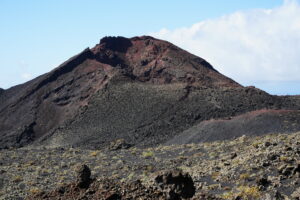
Fuencaliente sits at the far south of La Palma, where the long volcanic spine of Cumbre Vieja finally drops toward the sea. This is the youngest corner of an island built entirely by eruption, and it shows: the ground here is loose cinder and solidified lava rather than soil, dark red and black in colour, broken by low craters and ridges that rise abruptly from otherwise flat terrain.
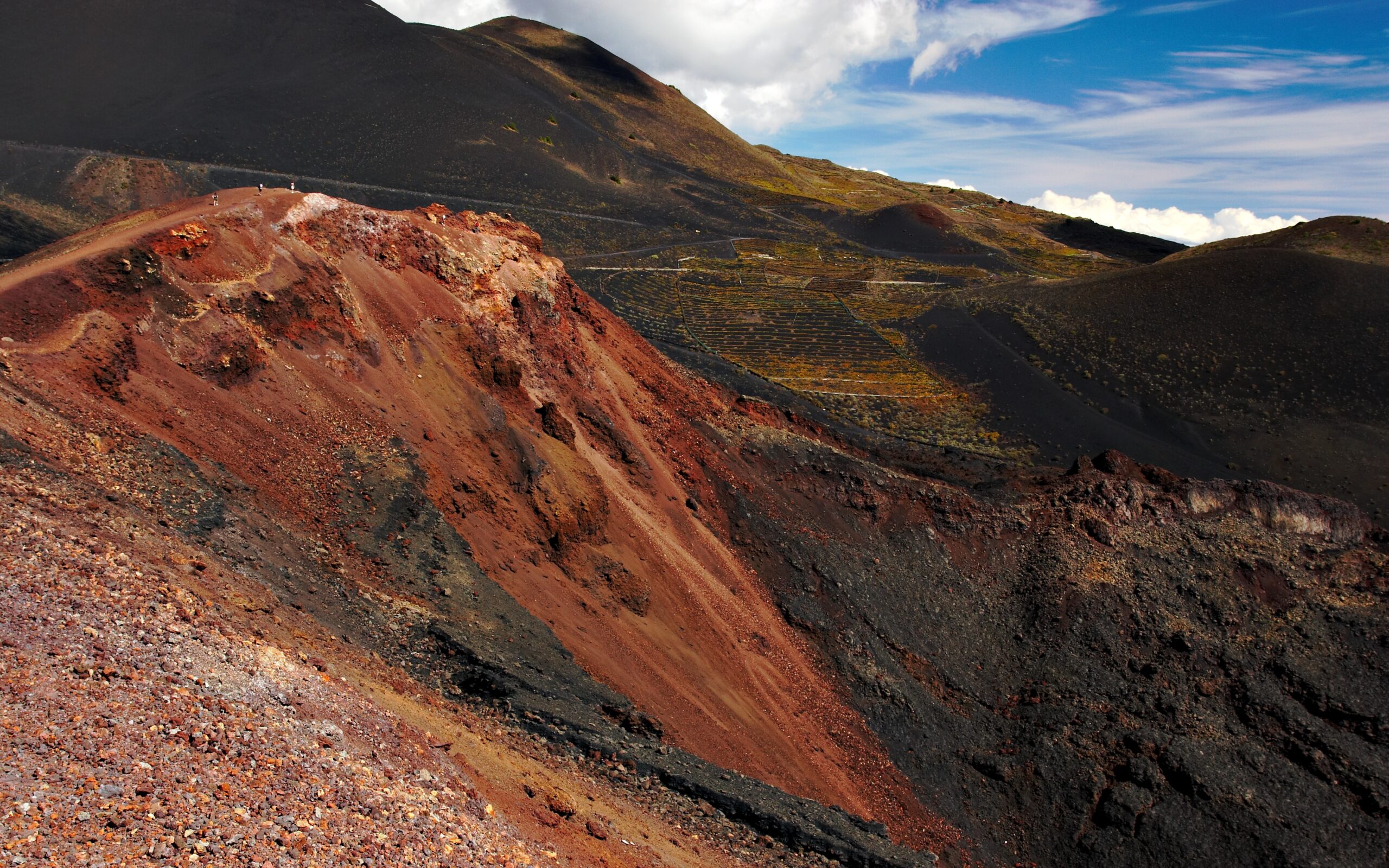
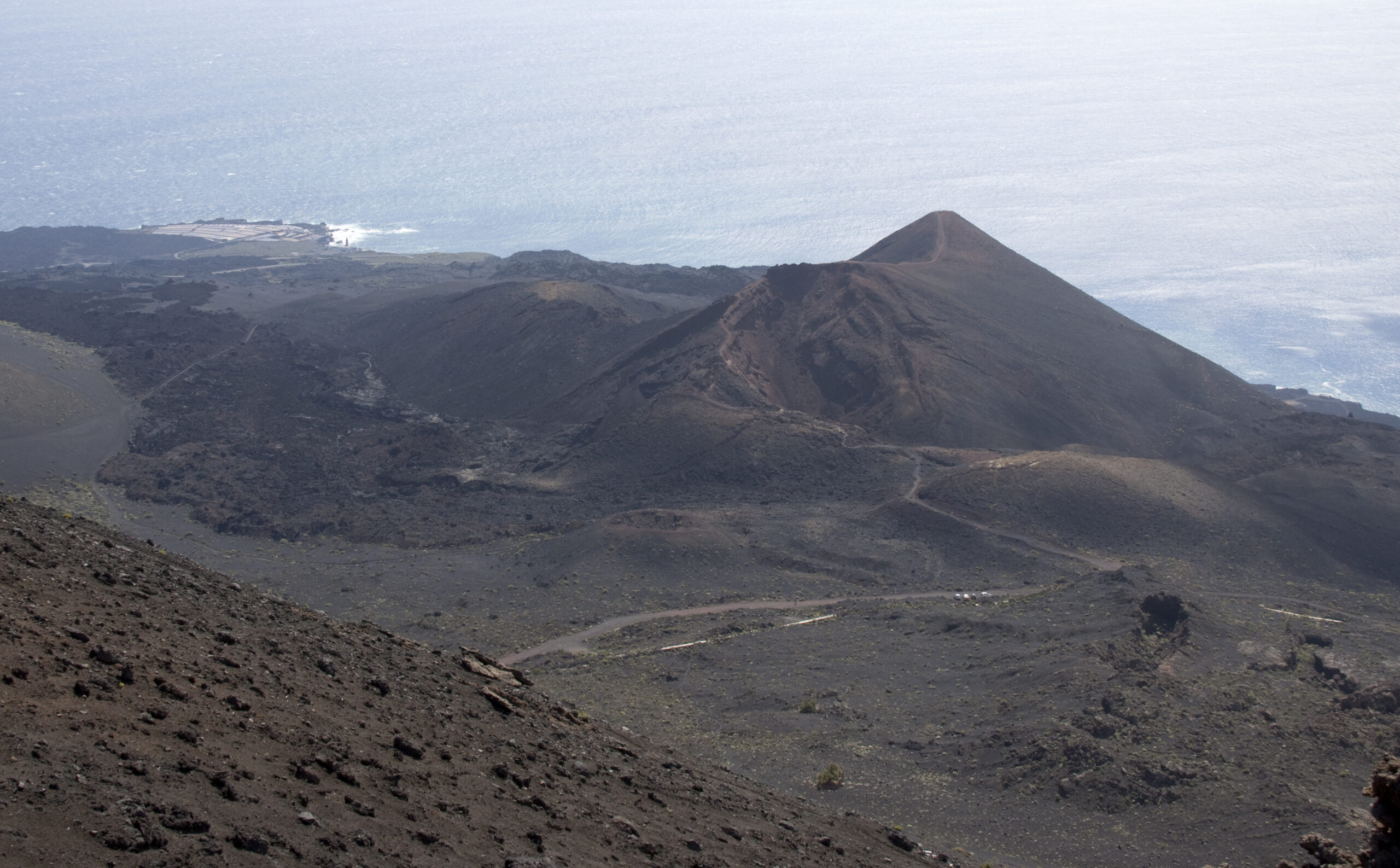
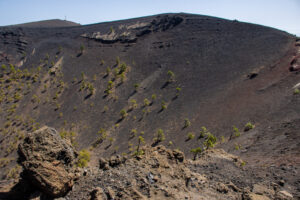
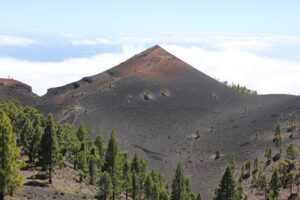
Vegetation is sparse and hardy. Canary pine takes hold on the upper slopes, its roots gripping porous rock, while lower down the exposed volcanic material has been worked into vineyards, the mineral-rich ground long valued for growing grapes in conditions that would defeat most other crops. The contrast between blackened cone and green pine, or black slope and pale vine leaf, is one of the defining sights of the area.
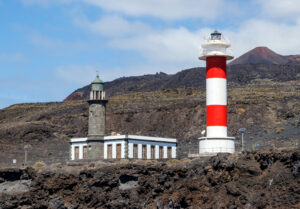
Trade winds sweep steadily from the northeast, and the open, treeless stretches around the cones mean little shelter from either sun or wind — worth bearing in mind when exploring on foot. Paths wind between cones and lava flows, opening onto views south and west across the coastline toward the ocean, with the geometry of the salt flats and the white line of the lighthouse visible in the distance.
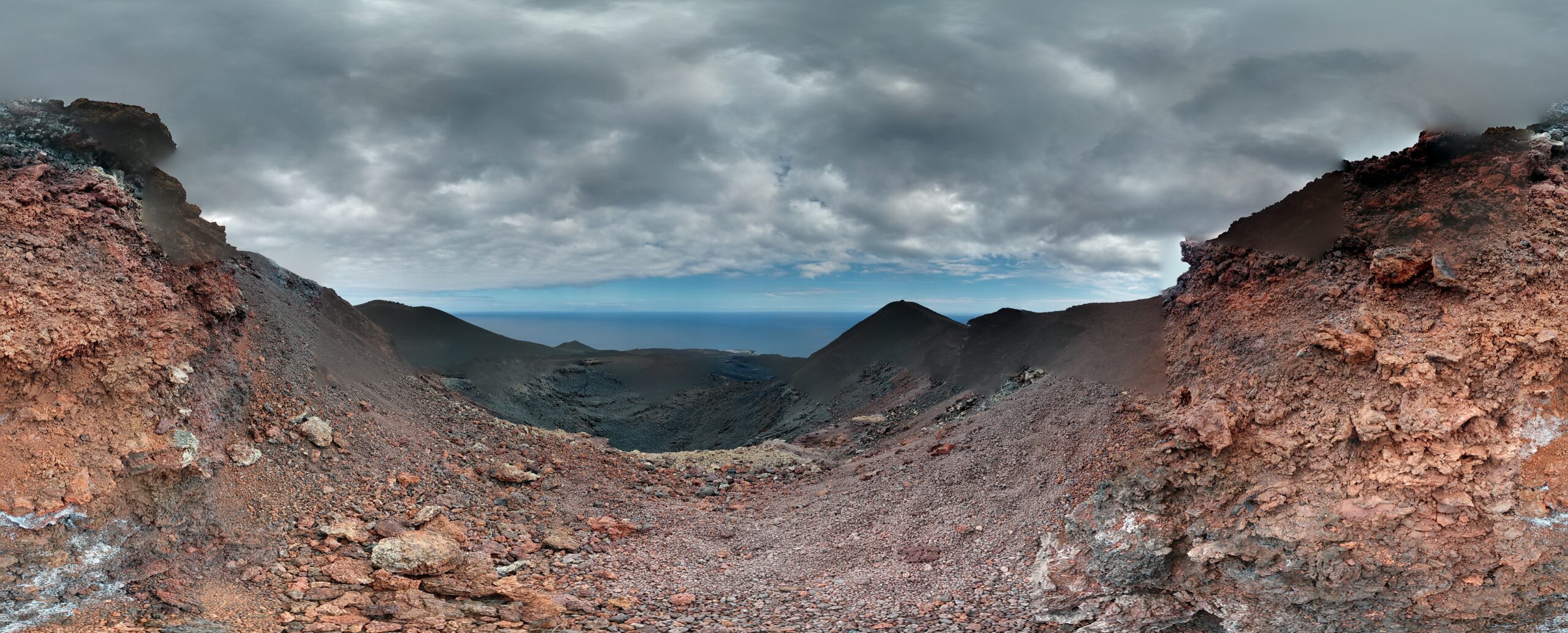
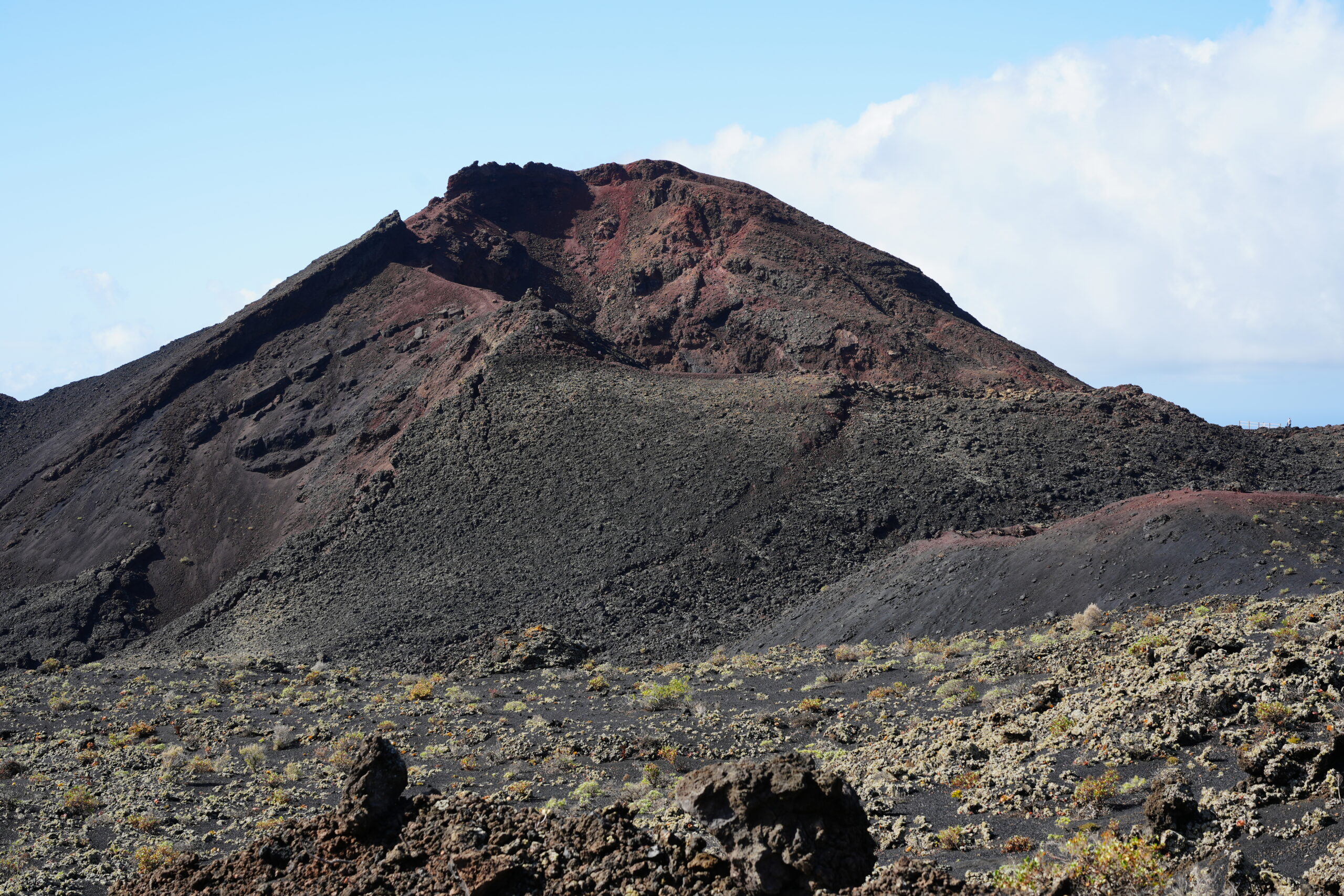
Because the landscape is so recent in geological terms, the ground still reads like a diagram of how the island itself was formed — layer upon layer of ash, cinder and rock, piled by repeated eruption rather than smoothed by long erosion. Few places on La Palma make that process so legible at ground level.