Volcán de Teneguía
Volcán Teneguía — La Palma’s Youngest Volcano
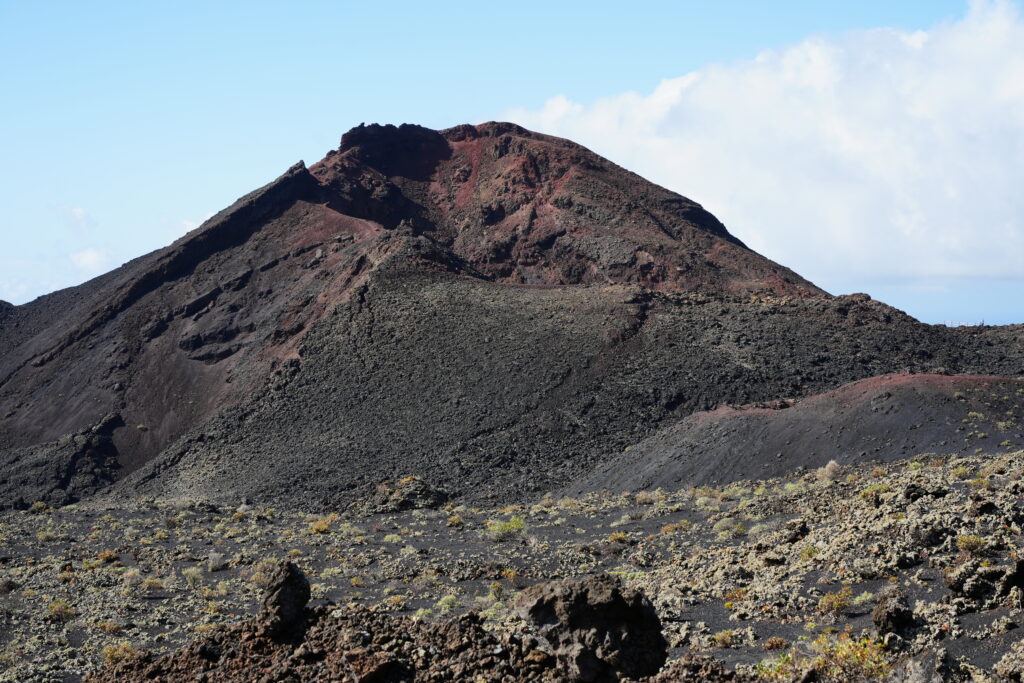
Volcán Teneguía is the youngest volcano on La Palma, a raw cone of black lava and red cinder formed during the 1971 eruption. Its slopes descend toward the Atlantic at the island’s southern tip, offering one of the clearest views of recent volcanic activity in the Canary Islands.
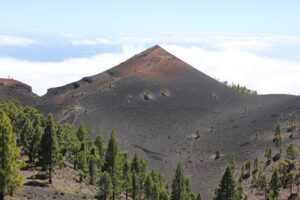
Volcán Teneguía rises from the southern flank of La Palma as a stark, freshly formed cone of black lava and red cinder. Created during the 1971 eruption, it remains one of the most recent examples of volcanic activity in the Canary Islands, its slopes still reading as newly built ground.
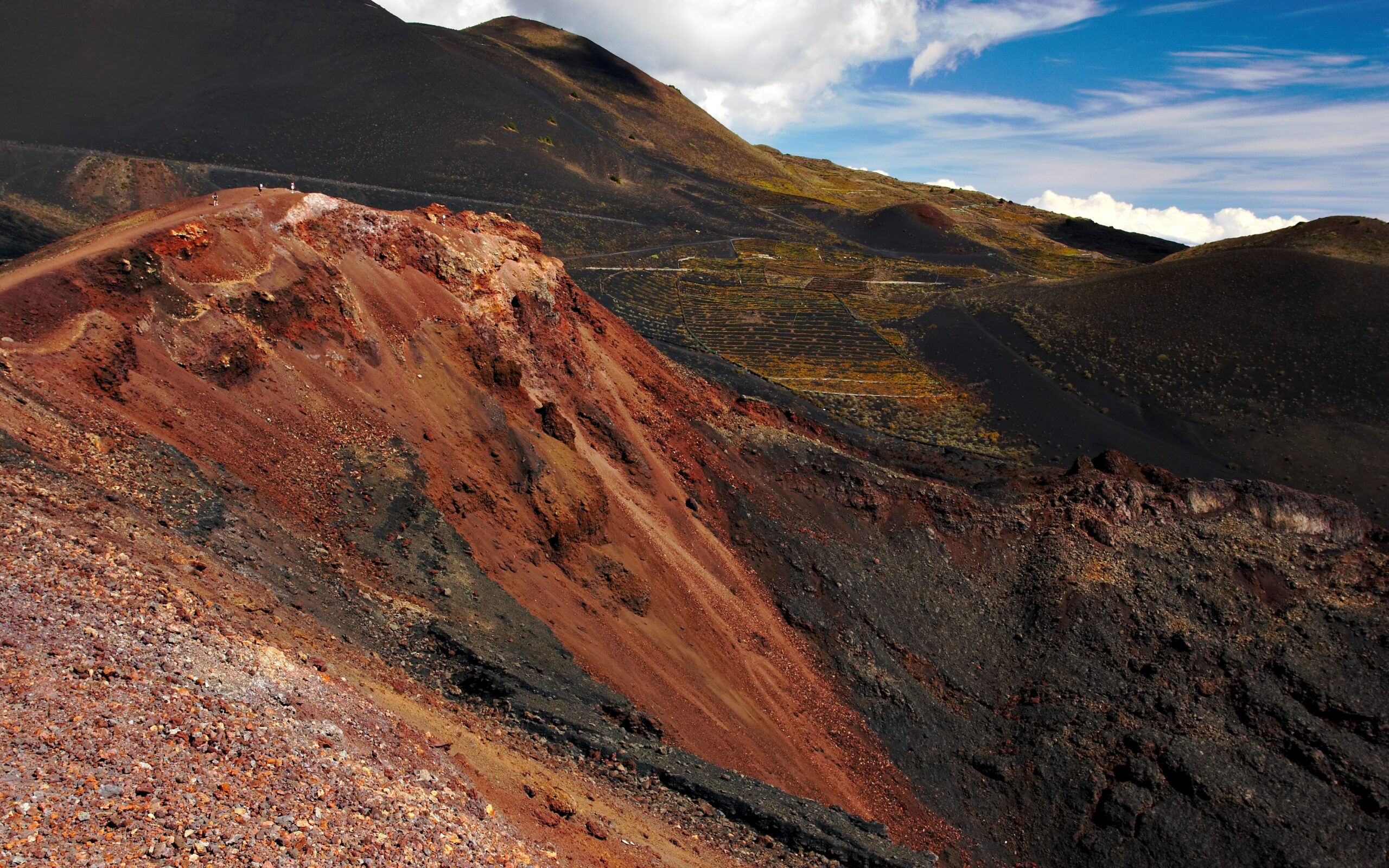
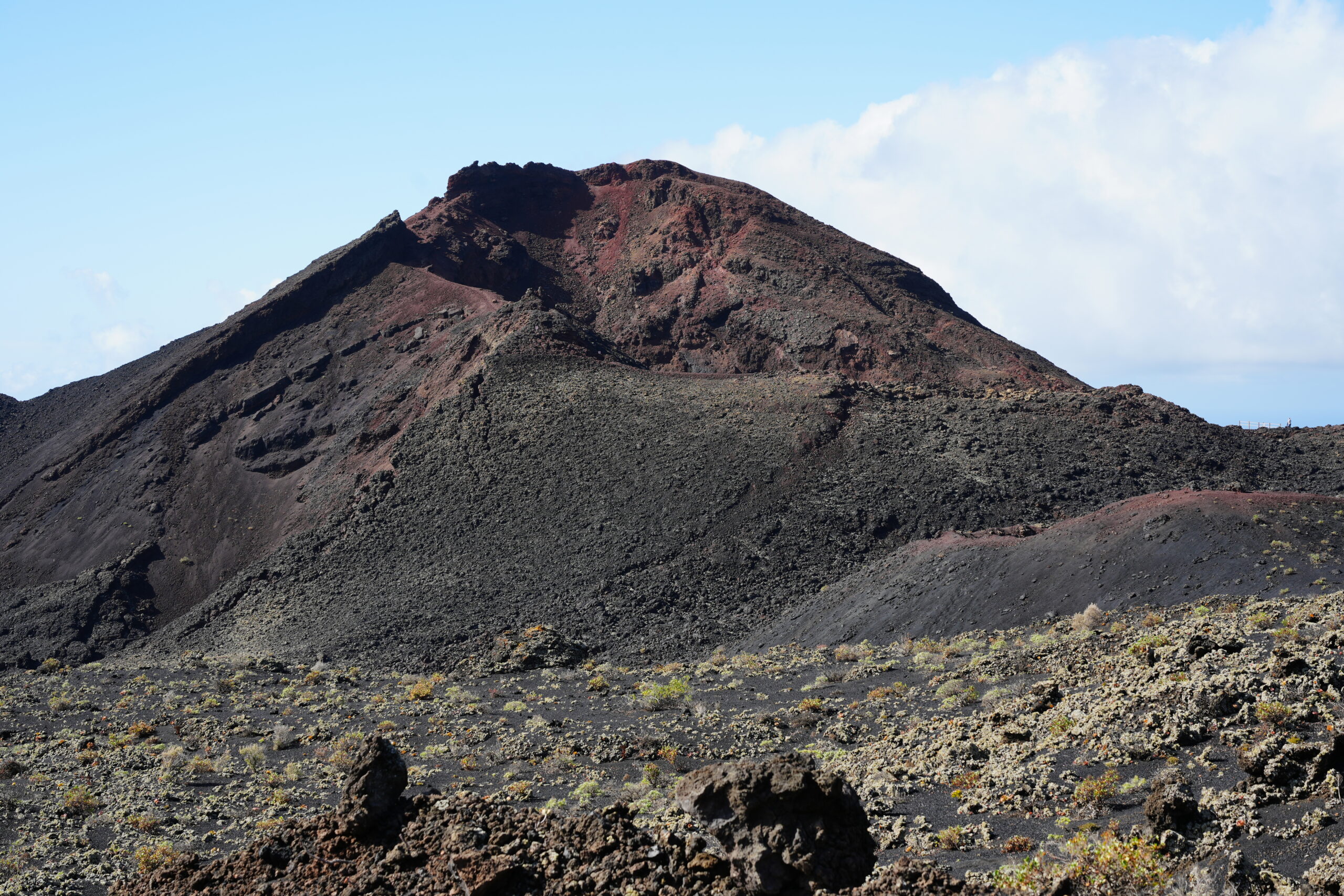
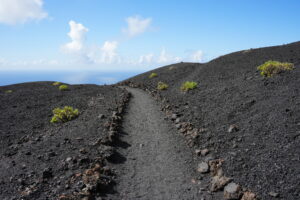
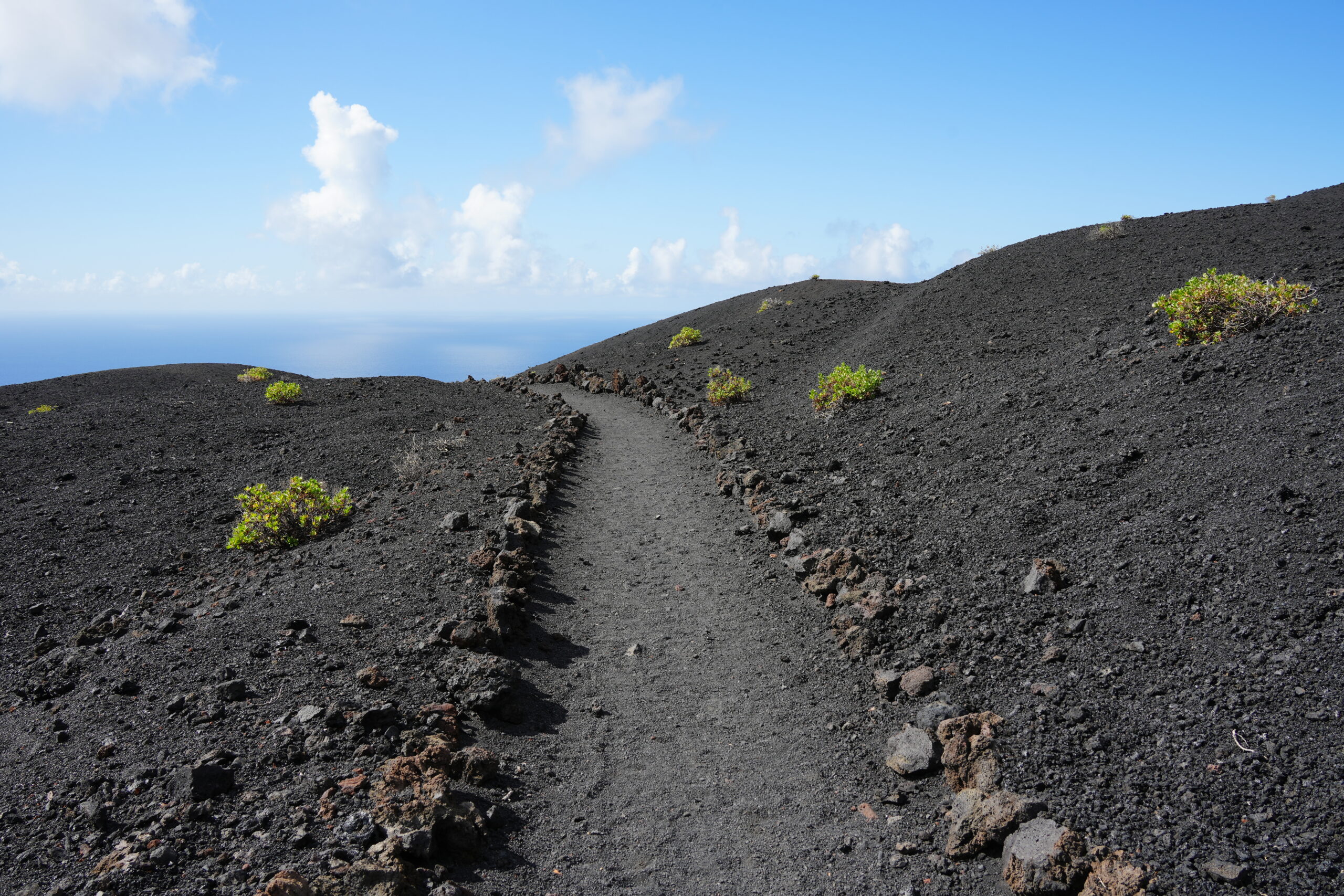
The approach crosses older volcanic terrain shaped by earlier eruptions, including the larger cone of San Antonio above. As the path descends toward Teneguía, vegetation thins and the landscape shifts to bare ash, fractured lava and warm, mineral‑rich ground where only hardy scrub has begun to take hold.
Volcán Teneguía erupted between 26 October and 28 November 1971, producing fresh lava flows, ash cones and new land along the southern tip of La Palma. It was the most recent surface eruption on the island prior to Cumbre Vieja in 2021.
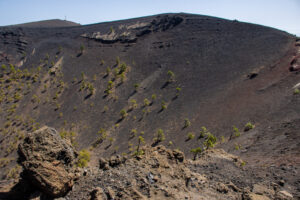
The cone itself is steep and sharply defined, its flanks streaked with loose cinder and blocks of solidified lava. From the upper slopes, views open toward the Atlantic and the salt flats of Fuencaliente, with the horizon running uninterrupted toward open water.
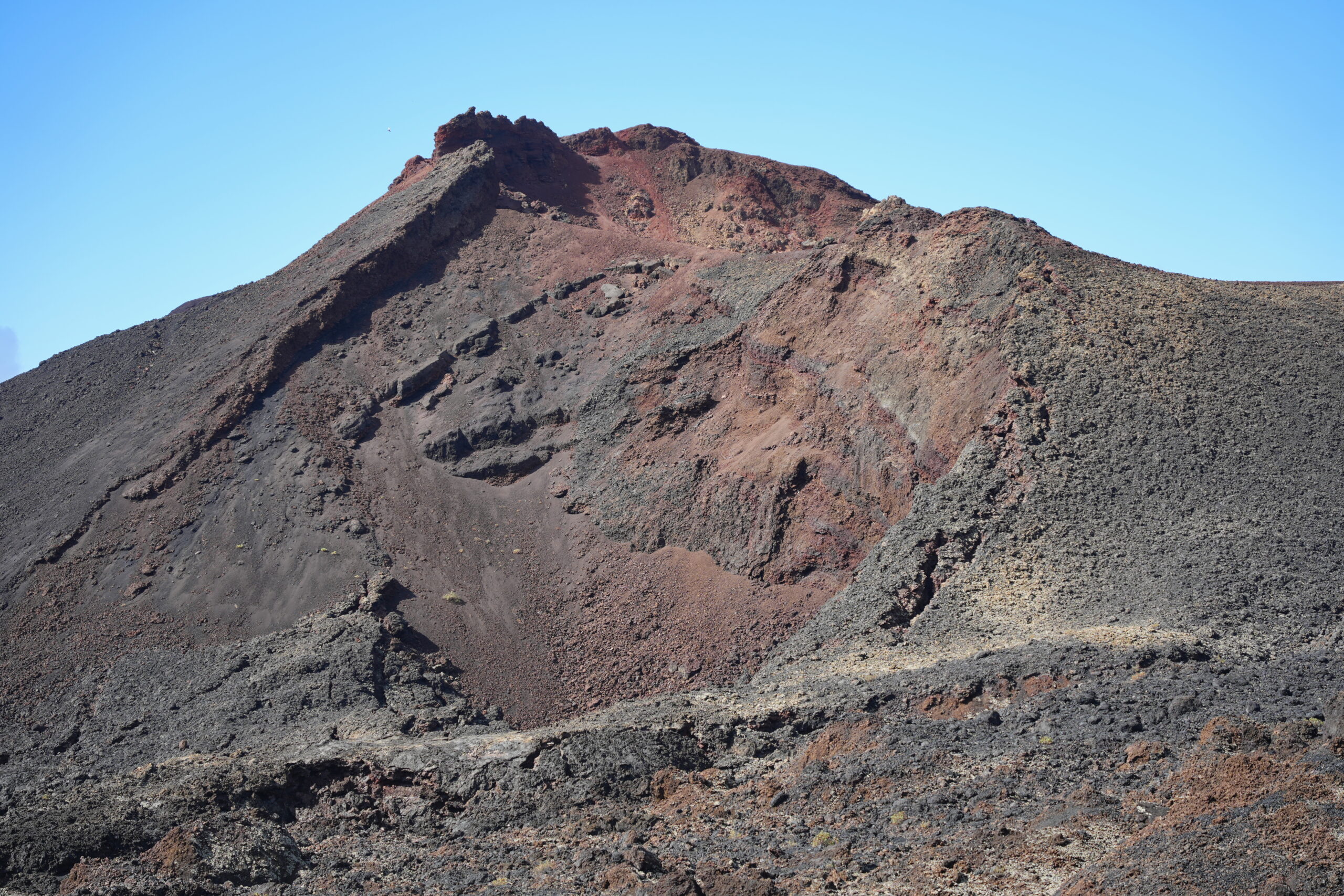
Teneguía’s youth makes it one of the most legible volcanic sites on La Palma. The textures of the lava, the colour of the ash and the shape of the cone all reflect processes that occurred within living memory, offering a rare chance to see a landscape still in the early stages of natural recovery.
Teneguía is one of the youngest volcanic terrains in the Canary Islands.
Its lava remains so fresh that:
- the ground is still warm near certain vents
- vegetation is sparse
- surfaces are sharp and unweathered
- colours (black, red, ochre) remain unusually vivid
It is effectively a living geological laboratory.
For visitors exploring the island’s southern tip, Teneguía forms a direct link between La Palma’s eruptive past and its present terrain — a raw, expressive volcano set against the open Atlantic.
Teneguía forms part of a wider volcanic corridor on La Palma’s southern flank.
- Volcán San Antonio — older cone with panoramic views
- Cumbre Vieja Ridge — historic fissure system
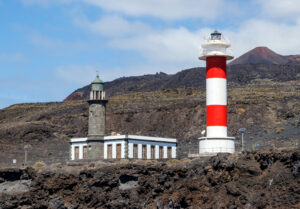
- Fuencaliente Salt Flats — coastal lava platforms
Together they illustrate centuries of volcanic activity.